











AI in Logistics and Supply Chain That Cuts Waste and Speeds Delivery

94% of supply chain leaders say limited end-to-end visibility is their top risk. Pinnasys builds AI systems that fix forecast accuracy, inventory positioning, and disruption response, scoped, costed, and live in weeks.

30-minute call · No pitch, no obligation · You leave with a scoped, costed use case

Trusted by 100+ businesses and AI-native startups

AT&T
Rivian
Captello
M&T Bank
Morgan Stanley
Ben Kinney Team · PLACE
Zager Guitar
Gridserve
Exowatt
Ward Recycling
Gillette
AT&T
Rivian
Captello
M&T Bank
Morgan Stanley
Ben Kinney Team · PLACE
Zager Guitar
Gridserve
Exowatt
Ward Recycling
Gillette
AT&T
Rivian
Captello
M&T Bank
Morgan Stanley
Ben Kinney Team · PLACE
Zager Guitar
Gridserve
Exowatt
Ward Recycling
Gillette

The AI in Supply Chain and Logistics Adoption Gap Nobody Talks About

The future of artificial intelligence in logistics and supply chain will not be decided by who buys the most AI tools. It will be decided by who gets AI past the pilot stage and running reliably inside the systems they already operate.

The Challenges AI for Logistics Is Built to Solve

These are not hypothetical risks. They are the daily operational realities that erode margin and damage customer relationships, and each one maps to a proven AI application in supply chain operations.

  • Poor Demand Forecast Accuracy

    Most forecasts rely on historical averages and monthly planning cycles that cannot keep pace with real demand signals. By the time a forecast is acted on, it is already outdated, leading to stockouts on fast movers and deadstock on slow ones.

  • Excess Inventory and Stockouts Coexisting

    Operations teams are simultaneously over-stocked on slow SKUs and under-stocked on fast ones. Safety stock levels are set by formula or gut feel, not by real-time demand variability and supplier lead time data, leaving capital locked up in the wrong places.

  • Supplier Disruptions Discovered Too Late

    Financial distress, geopolitical exposure, and operational failures at Tier 1 and Tier 2 suppliers are detectable weeks before they stop shipments. Without continuous monitoring, most teams find out when an order misses its window, not before it does.

  • Inefficient Routing and Logistics Spend

    Routes planned the night before cannot account for traffic, carrier load, fuel changes, or delivery window shifts that happen throughout the day. Static planning consistently leaves 15 to 25% of logistics spend on the table through missed consolidation and suboptimal carrier selection.

  • No Real-Time End-to-End Visibility

    ERP, WMS, and TMS systems hold different slices of the truth on different latencies. Planning teams spend 60% of their time aggregating and reconciling data, time that cannot go toward actual decisions. Without a unified intelligence layer, visibility gaps are the default state.

  • Slow and Costly Returns Processing

    Returns triage is manual, slow, and inconsistent. Items that could be restocked sit in queues. Items headed for disposal consume refurb labor first. Without automated classification and routing at intake, reverse logistics drains margin on every return and builds a backlog that compounds at peak periods.

  • Unreliable Delivery Promises to Customers

    Delivery ETAs based on historical averages cannot account for carrier variability, current port congestion, or weather events. Customer service teams commit to windows they cannot guarantee, and 65% of customers do not give a second chance after a missed promise.

  • Warehouse Inefficiency and Labor Waste

    Pick paths, slotting decisions, and labor scheduling are often set manually or by rules built years ago. Demand pattern shifts make yesterday's warehouse layout a source of friction today. Without ML-driven slotting and labor demand forecasting, fulfilment centers operate below their capacity ceiling.

  • Fragmented Data Across Disconnected Systems

    ERP, WMS, TMS, and supplier portals each hold a partial picture of operational reality on different update cycles. Decisions made from any one system are decisions made with incomplete information. Data fragmentation is not a technology problem. It is the root cause of most supply chain inefficiency.

AI in Supply Chain Applications That Address Real Logistics Problems

Demand Forecasting & Inventory Optimization

ML models blend sales history, promotions, seasonality, and external signals like weather into SKU-by-location forecasts, then set safety stock and reorder points that reflect real demand variability and supplier lead times.

OutcomeFewer stockouts on fast movers, less cash tied up in slow ones

Supply Planning & Scheduling

Constraint-aware planning that balances demand against production capacity, material availability, and supplier commitments, and rebuilds the plan in minutes when an input changes instead of waiting for the next monthly cycle.

OutcomePlans that stay feasible when capacity or materials shift

Warehouse & Fulfillment Optimization

AI-driven slotting, pick-path sequencing, and labor forecasting that adapt as order profiles change, plus allocation logic that routes each order to the fulfillment node that can ship it fastest at the lowest cost.

OutcomeMore orders shipped per labor hour, fewer split shipments

Transportation & Route Optimization

Route planning that reoptimizes on live traffic, delivery windows, and vehicle capacity, with carrier selection and load consolidation that weigh rate, available capacity, and on-time performance for every shipment.

OutcomeLower cost per delivery, fewer empty and partial loads

Real-Time Shipment Visibility & ETA Prediction

One view of every shipment across carrier feeds, telematics, and port data, with ETA models that learn from lane history and current conditions so customer service commits to dates it can keep.

OutcomeDelays flagged early, before the customer calls

Supplier Risk & Disruption Management

Continuous monitoring of supplier financial health, delivery performance, news, and geopolitical exposure across Tier 1 and Tier 2, with AI agents that surface alternate sources and response playbooks when a risk score spikes.

OutcomeDisruptions caught in time to act, not after an order misses

Predictive Maintenance & Asset Optimization

Models that read sensor, telematics, and maintenance history to predict failures in trucks, forklifts, conveyors, and sortation equipment, then schedule service around operational peaks instead of in the middle of them.

OutcomeLess unplanned downtime across fleet and facility assets

Network, Cost & Sustainability Optimization

Scenario modeling for DC locations, inventory placement, and lane design that weighs service levels, total landed cost, and carbon emissions together, so network decisions are tested before capital is committed.

OutcomeNetwork choices backed by cost, service, and emissions data

Custom AI Solutions for Logistics and the Supply Chain Industry

Six capability layers we combine into AI-driven logistics solutions, from warehouse automation to fleet intelligence, based on what your workflow actually needs.

AI-Driven Supply Chain Systems That Reached Production

Every number below comes from a deployed logistics AI system, not a pilot. Real clients, real operations, measured outcomes.

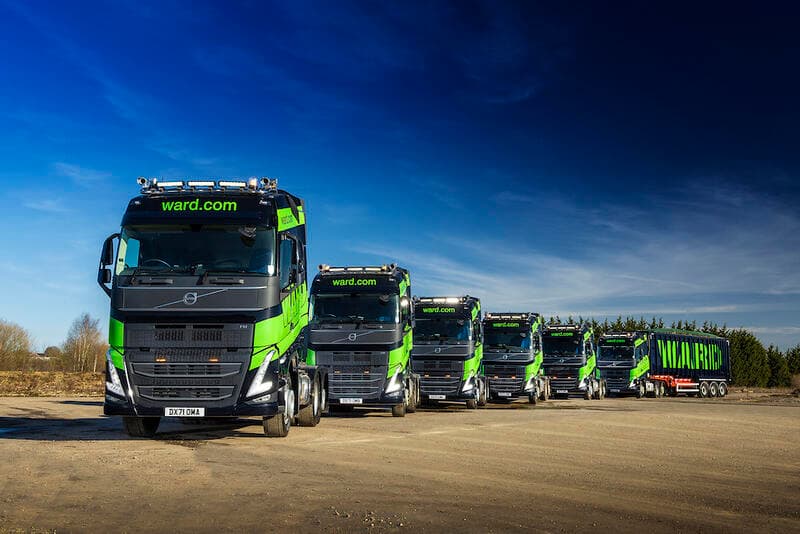
Ward

AI Document Extraction That Reads Freight Paperwork Without Retyping

80%

Faster Invoice Processing

25 hrs

Data-entry Time Saved Weekly

Ward case study
Rivian

Conversational AI and Agentic Automation for Automotive Operations

65%

Support Tickets Automated

50%

Faster Exception Resolution

Rivian case study
Routeware, Inc.

AI Contract Review and Document Intelligence for Waste Management

76%

Reduced Contract Review Time

30%

Lower Legal Cost per Contract Cycle

Routeware, Inc. case study
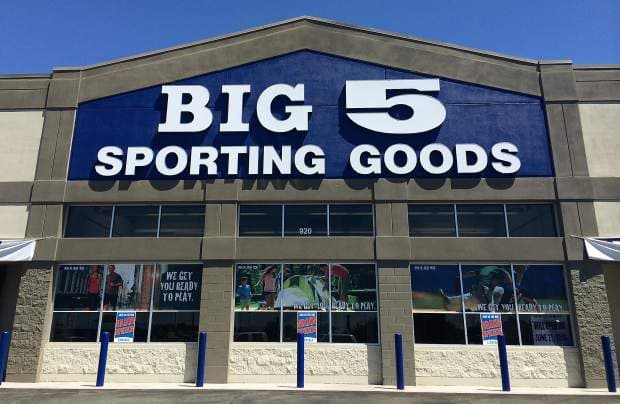
Big 5 Sporting Goods

Decision Intelligence for Retail Inventory and Demand Planning

30%

Fewer Overstock and Stockout Incidents

20%

Better Inventory Turnover

Big 5 Sporting Goods case study

AI in Logistics and Supply Chain Management, Built for Your Industry

Retail & E-Commerce

  • SKU-level demand forecasting with seasonality and promotion modeling
  • Markdown optimization to clear slow movers before obsolescence
  • Last-mile delivery ETA prediction for customer promise accuracy
  • Returns classification and automated reverse logistics routing

Manufacturing

  • Raw material procurement forecasting with supplier lead time modeling
  • Production schedule optimization against real-time capacity and material availability
  • Supplier risk scoring for Tier 1 and Tier 2 network exposure
  • Predictive maintenance signal integration to prevent supply line stoppages

Third-Party Logistics (3PL)

  • Multi-client route optimization with load consolidation logic
  • Carrier selection AI using real-time rate, capacity, and performance data
  • Warehouse labor demand forecasting for staffing optimization
  • Cross-dock scheduling AI to minimize dwell time

Pharma & Life Sciences

  • Cold chain compliance monitoring with deviation alerting
  • Expiry-aware inventory allocation to minimize controlled waste
  • Regulatory-compliant demand forecasting for controlled substances
  • Serialization data reconciliation across distribution partners

Energy & Industrial

  • MRO parts inventory optimization for planned and unplanned maintenance
  • Spare parts demand forecasting from equipment sensor and failure data
  • Vendor-managed inventory system automation for critical parts
  • Field logistics optimization for remote or offshore operations

Food & Beverage

  • Perishable inventory allocation with expiry date and demand modeling
  • Weather-driven demand forecasting for seasonal and event-based products
  • Supplier quality monitoring with audit trail and risk scoring
  • Recall response AI for rapid lot-level traceability across distribution

Ready to Stop Flying Blind? Put AI Logistics to Work Across Your Supply Chain.

Book a 30-minute discovery call with a Pinnasys engineer who specializes in AI for logistics. You leave with a scoped, costed use case, with no commitment required.

Book a Discovery Call

30-minute call · No pitch, no obligation · You leave with a scoped, costed use case

The AI and ML in Supply Chain Stack Behind Every System We Build

AI Models & LLMs

  • Claude (Anthropic)
  • GPT-4o
  • Gemini Pro
  • Llama 3
  • Mistral
  • Claude (Anthropic)
  • GPT-4o
  • Gemini Pro
  • Llama 3
  • Mistral

ML & Forecasting

  • XGBoost
  • LightGBM
  • Prophet
  • PyTorch
  • scikit-learn
  • Statsforecast
  • XGBoost
  • LightGBM
  • Prophet
  • PyTorch
  • scikit-learn
  • Statsforecast

Agent Frameworks

  • LangChain
  • LangGraph
  • CrewAI
  • AutoGen
  • LangChain
  • LangGraph
  • CrewAI
  • AutoGen

Retrieval & Vectors

  • Pinecone
  • Weaviate
  • pgvector
  • Qdrant
  • Pinecone
  • Weaviate
  • pgvector
  • Qdrant

Data & Integration

  • Apache Kafka
  • Apache Airflow
  • dbt
  • SAP API
  • Oracle SCM
  • Blue Yonder API
  • Manhattan WMS
  • Apache Kafka
  • Apache Airflow
  • dbt
  • SAP API
  • Oracle SCM
  • Blue Yonder API
  • Manhattan WMS

Cloud & Infrastructure

  • AWS SageMaker
  • Azure ML
  • GCP Vertex AI
  • Snowflake
  • Databricks
  • AWS SageMaker
  • Azure ML
  • GCP Vertex AI
  • Snowflake
  • Databricks

Why Clients Choose Pinnasys as Their AI Development Company for Logistics

E

Everett

Recycling Operations Engineer, Ward Recycling & Logistics

Their intelligent document extraction proved remarkably accurate from the start. bills, handwritten driver notes, a different intake routine at every terminal. Pinnasys built the engine that reads them and writes verified freight records straight into dispatch

1 / 6

Logistics AI Solutions Built to the Standards Your Industry Requires

Every AI solution for logistics that Pinnasys builds is designed to support the trade, cargo security, product safety, and data rules your auditors, customers, and regulators hold you to.

  • C-TPAT

    US CBP supply chain security partnership for importers and carriers

  • AEO

    Authorised Economic Operator customs trust status (WCO SAFE)

  • ISO 28000

    Security and resilience management for the supply chain

  • TAPA FSR / TSR

    Cargo security standards for facilities and trucking

  • FSMA 204

    FDA food traceability records and critical tracking events

  • DSCSA

    US drug supply chain serialization and product tracing

  • EU GDP

    Good Distribution Practice for medicines and cold chain

  • FMCSA ELD & HOS

    Electronic logging and driver hours-of-service rules

  • Dangerous Goods

    49 CFR, IMDG Code, and IATA DGR hazmat shipping rules

  • UFLPA

    Forced labor import restrictions and supplier traceability

  • ISO 14083 & GLEC

    Transport chain emissions calculation and reporting

  • ISO 27001, SOC 2 & GDPR

    Security and privacy controls for your operational data

Common Questions About the Role of AI in Supply Chain Management

Something else on your mind?