


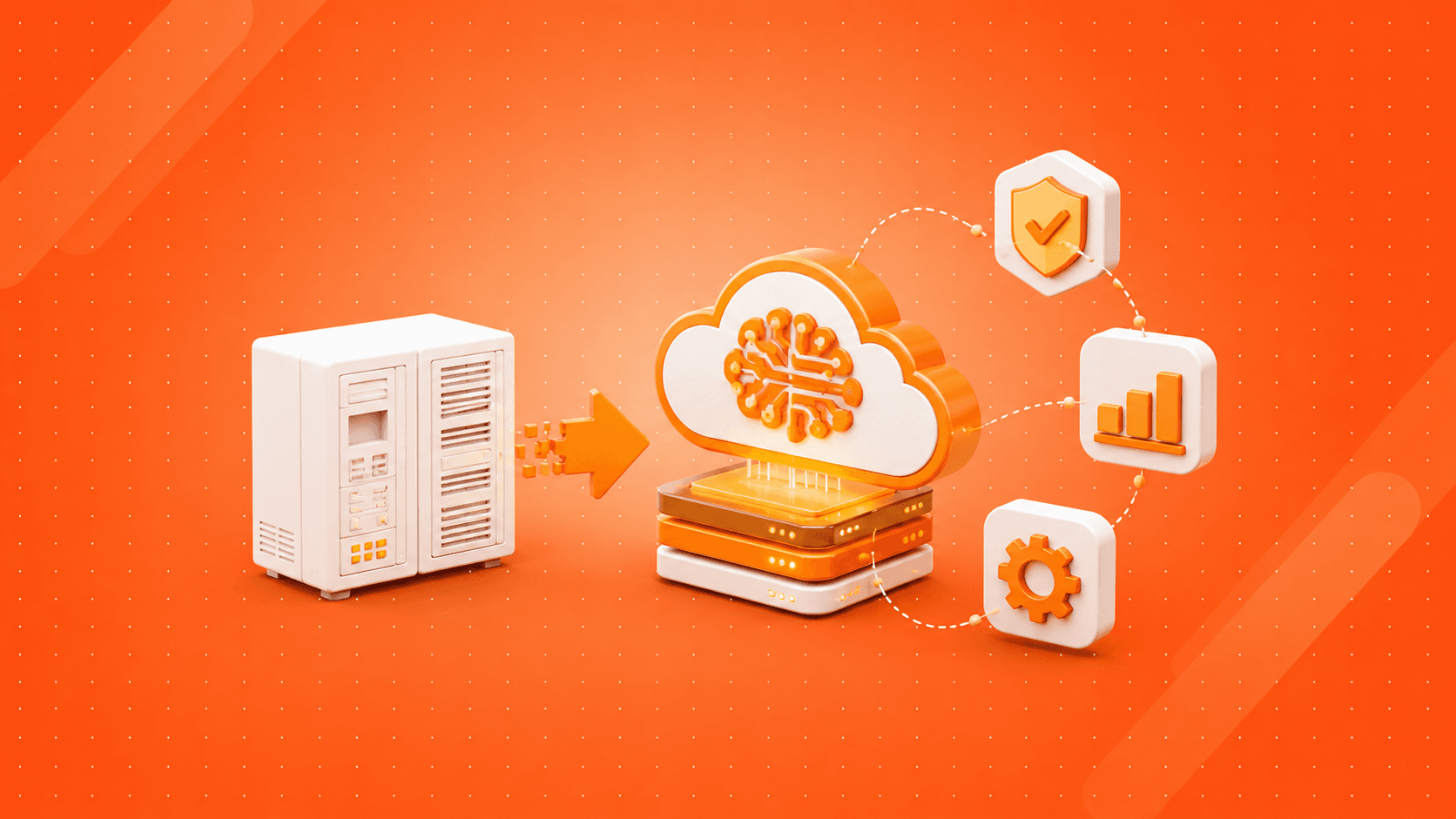
Modernizing legacy systems with AI enables enterprises to transform outdated infrastructure into scalable, secure, and cloud-ready environments without complete system replacement. It leverages automation, intelligent code transformation, and data integration to reduce technical debt and improve operational efficiency.
Many enterprises still rely on legacy systems to run critical operations, but aging infrastructure, monolithic architectures, and growing technical debt are slowing innovation and increasing operational costs. According to Gartner, technical debt continues to impact scalability, security, and long-term IT agility across modern enterprises.
With the increase in cloud adoption and AI integration in businesses, it has been a priority for many to modernize legacy systems. AI-driven modernizations help enterprises automate the refactoring of systems, accelerating cloud migration and modernizing legacy systems. It also helps in modernizing legacy systems and data integration with minimal disruption to businesses.
What is Legacy System Modernization?
Legacy system modernization is the process of upgrading outdated software applications, infrastructure, databases, and enterprise architectures to align with modern business, security, and scalability requirements. It involves transforming monolithic systems, legacy codebases, and disconnected workflows into agile, cloud-ready environments that support automation, real-time analytics, AI integration, and seamless interoperability across platforms.
The post-modernization activity can include system refactoring, migration to the cloud, API integration, microservices-based modernization, or artificial intelligence-based modernization. The purpose of modernization is to reduce technical debt, enhance operational efficiency, enhance system integration, or enable future digital transformation.
Top 5 Use Cases of AI in Legacy System Modernization
Code Transformation
AI allows automatic analysis, refactoring, and translation of legacy code, such as COBOL, VB, or old Java, into a modern cloud-ready language, like Java or Python. This way, the modernization process is mainly human-driven and accelerated, while risk and business knowledge loss are minimized.
Example: IBM is providing AI-enabled COBOL modernization tools that can analyze the legacy mainframe code to convert it into modern application layers: this will make the code more maintainable and easy to integrate with the cloud.
Automated Quality Assurance
QA powered by AI automates the process of generating test cases, regression testing, and defect prediction in both legacy and modern applications. This leads to faster testing, less human error, and system stability during the migration process.
Example: Microsoft uses AI-powered testing in Azure DevOps to detect code anomalies and automatically generate test scenarios, reducing QA cycles and improving release reliability.
AI-Driven Data Integration
AI makes it easy to bring together dispersed legacy data through cleansing, mapping, and transforming both structured and unstructured data into a single, analytics-ready source. Presenting the current unified picture and providing insights in real-time will break down knowledge silos that have persisted for decades across enterprise systems.
Example: Siemens and AWS industrial edge architectures use AI-enabled data pipelines to harmonize OT/IT data and enable cloud-based analytics and digital twin creation for manufacturing systems
Predictive Maintenance
Artificial intelligence through predictive maintenance relies on advanced machine-learning models and sensor data to detect any anomalies, predict failures, and improve the available uptime of a system. This reduces both downtime and associated maintenance costs exponentially in the classical or legacy heavy industrial domain.
Example: IBM highlights how AI-driven predictive maintenance systems reduce unplanned downtime by analyzing real-time equipment data from IoT sensors and triggering early failure alerts in industrial operations
Scaling with Edge Computing
Leveraging AI and edge computing allows for the processing of data in real time near the source to minimize delays, which improves performance for legacy mission-critical applications. It also facilitates hybrid cloud architectures or the distribution of AI applications and data streams.
Example: IBM edge AI deployments demonstrate how manufacturing systems use edge-based AI inference to process data locally while syncing with cloud systems for analytics, improving response time and operational efficiency.
Key Challenges in Modernizing Legacy Systems
Data Silos
Older systems hold business information in multiple, disconnected instances throughout various systems, applications, and departments. This approach can result in data silos with limited visibility into enterprise data and reduced ability to conduct real-time analysis.
This proliferation of content systems and protected data silos becomes a significant obstacle for organizations seeking to modernize legacy systems and move to the cloud with AI. Data silos, inconsistent data formats, and duplicate records complicate migration efforts and heighten the chance of data loss during system migration.
Security & Compliance Risks
Outdated legacy systems typically lack modern security frameworks such as zero-trust architecture, encryption standards, and advanced identity management. This exposes enterprises to higher risks of breaches, ransomware attacks, and compliance violations.
According to the IBM Cost of a Data Breach Report, systems with weak security controls significantly increase breach recovery costs and operational disruption. During AI-powered system migration, security gaps must be addressed early to ensure compliance with regulations like GDPR, HIPAA, and industry-specific standards.
Architectural Complexity
Legacy environments are usually powered by tightly coupled monoliths built on undocumented dependencies and legacy technology stacks. Planning the refactoring and modernization roadmap of these will take a good amount of time and effort.
Identifying undocumented interdependencies of modules is important during AI-based modernization because changes to one module may cascade and cause multiple process failures if dependencies between processes are not modeled and systematically connected via AI-based modernization tools.
Cost & Resource Constraints
Modernizing legacy systems requires significant investment in infrastructure upgrades, cloud platforms, skilled engineering resources, and AI integration tools. Many organizations also face the challenge of running legacy and modern systems in parallel during transition phases.
This dual-operating environment increases operational overhead, making cost optimization a key factor in modernization strategy. AI-powered automation helps reduce manual effort in refactoring, testing, and deployment, but initial modernization planning still demands careful budgeting and phased execution.
Bridging Legacy Systems to Modern Infrastructure
One of the biggest challenges in legacy transformation is enabling seamless communication between old systems and modern cloud-native environments. Without proper integration, organizations face workflow disruption, data inconsistency, and limited scalability.
To mitigate this, enterprises apply API-first strategies, microservices architecture, and containerization to map legacy systems to modern baselines. This facilitates progressive modernization while preserving business needs and ensuring cloud migration leveraging AI platform, orchestration, and automation.
How to Modernize Legacy Systems with AI?
Step 1: Assess Your Existing Legacy Systems and Requirements
Evaluate current legacy applications, infrastructure, and workflows to identify performance gaps, integration issues, and modernization opportunities. This step builds the foundation for AI-driven modernization and helps prioritize high-impact systems for transformation.
AI Readiness Assessment
- Evaluate data quality, structure, and accessibility
- Identify system dependencies and integration constraints
- Assess API readiness and cloud compatibility
- Review security, compliance, and governance maturity
Step 2: Define AI Legacy Modernization Strategy
Define a structured modernization roadmap aligned with business goals, technical constraints, and AI integration scope. This ensures controlled legacy transformation with minimal operational disruption. It also helps prioritize workloads based on risk, complexity, and business impact for phased execution.
Step 2.1: Discovery and Baseline
- Map applications, workflows, and system dependencies
- Establish baseline KPIs for performance and reliability
- Identify technical debt and modernization complexity
Step 2.2: Data and Access Preparation
- Standardize and clean enterprise data sources
- Define secure access controls and governance policies
- Enable data pipelines for AI processing readiness
Step 2.3: Pilot Implementation
- Select low-risk systems or workflows for testing
- Validate AI-powered system migration approach
- Measure performance before full-scale rollout
Step 3: Prepare Your Data for AI Readiness
Organize, clean, and structure legacy data to ensure compatibility with AI models. High-quality data improves system integration and AI performance, reduces errors, and enables accurate automation and predictive analytics. It also establishes a reliable foundation for training AI models and ensuring consistent decision-making across enterprise systems.
Step 4: Integrate AI Capabilities into Core Business Operations
Embed AI into workflows such as automation, analytics, and decision-making systems. This enables AI-powered system migration while improving efficiency, scalability, and real-time operational intelligence. It also ensures that legacy systems evolve into adaptive, AI-enabled enterprise platforms capable of continuous optimization.
Low-Risk Patterns that Reduce Disruption
- API wrapping for legacy system access
- Incremental microservices-based refactoring
- Side-by-side AI augmentation of workflows
- Gradual workload migration to cloud platforms
Step 5: Streamline Security and Compliance with AI
Use AI-driven monitoring to detect anomalies, automate threat response, and ensure compliance with regulatory frameworks. This strengthens security posture during legacy transformation and reduces operational risk. It also enables proactive identification of vulnerabilities before they impact production environments.
Step 6: Upgrade Your Infrastructure with Cloud, Containers & API
Migrate legacy workloads to cloud platforms and adopt containerization for scalability. APIs and microservices enable seamless integration between legacy systems and modern cloud-native architectures. This creates a flexible, future-ready infrastructure that supports continuous AI integration and modernization.
Step 7: Continuous Monitoring and Optimization
Continuously track system performance, model accuracy, and operational efficiency after modernization. AI-based observability ensures long-term stability and supports iterative improvement of modernized systems. It also helps enterprises quickly detect performance degradation and optimize workloads in real time.
Core KPIs to Track
- System uptime and downtime reduction
- Deployment frequency and release speed
- Cost savings from automation
- Error rate and defect reduction
- Performance and latency improvements
Step 8: Partner with AI Experts
Engage experienced technology partners to accelerate AI-driven modernization, reduce migration risks, and design scalable architecture. Expert guidance ensures the successful execution of legacy system modernization strategies. Organizations can collaborate with Pinnasys to build AI-powered modernization roadmaps and enable secure, scalable system transformation.
Still running critical operations on aging infrastructure?
Pinnasys designs AI-driven modernization roadmaps that reduce technical debt without disrupting your business. Book a modernization assessment today and see exactly where to start.
Future of AI in Modernizing Legacy Systems
Process Automation
AI-driven process automation enables enterprises to eliminate repetitive manual tasks across legacy systems, improving operational efficiency and reducing human error. It accelerates workflows, enhances productivity, and supports seamless legacy system modernization with scalable, intelligent automation frameworks.
Generative AI
Generative AI supports legacy transformation by assisting in code generation, system refactoring, documentation creation, and test automation. It reduces development effort and speeds up AI-powered system migration by converting complex legacy logic into modern, maintainable structures.
Retrieval-Augmented Generation
Retrieval-Augmented Generation enhances legacy system modernization by enabling AI models to fetch real-time contextual data from enterprise repositories. It improves decision accuracy, supports intelligent query handling, and strengthens system integration and AI across distributed legacy environments.
Agentic AI Workflows
Agentic AI workflows enable autonomous decision-making within modernization processes by allowing AI agents to execute, monitor, and optimize tasks independently. This improves adaptability, reduces manual intervention, and enhances continuous legacy system transformation efficiency.
AI Integration with Cloud Computing
AI integration with cloud computing enables scalable, flexible, and distributed modernization environments. It supports real-time analytics, workload optimization, and seamless cloud migration with AI, ensuring legacy systems evolve into intelligent, cloud-native architectures.
The Bottom Line
Legacy system modernization is no longer a one-time infrastructure upgrade but a continuous transformation strategy driven by AI, cloud, and automation. Enterprises that adopt AI-driven modernization can reduce technical debt, improve scalability, and enable faster innovation cycles across business-critical systems.
We at Pinnasys help organizations modernize legacy environments using AI-powered system migration, cloud-native architectures, and intelligent automation frameworks. Our approach ensures secure, scalable, and low-disruption transformation aligned with enterprise growth objectives.
Key Takeaways
- AI-driven legacy system modernization helps enterprises upgrade outdated systems without full replacement.
- It reduces technical debt through automation, code transformation, and intelligent data integration.
- A structured modernization roadmap ensures minimal disruption and controlled system migration.
- Cloud, APIs, and microservices form the backbone of scalable and future-ready architectures.
Frequently Asked Questions About AI-Driven Modernization
What Are Legacy Systems?
Legacy systems are outdated software applications, databases, or infrastructure that still support critical business operations. They often rely on older technologies and lack scalability, making integration with modern cloud platforms and AI systems difficult.
How to Identify AI Modernization Opportunities in Workflows?
AI modernization opportunities can be identified by analyzing repetitive manual tasks, slow workflows, and data-heavy processes. Areas with high operational cost, frequent errors, or poor scalability are strong candidates for AI-driven automation and optimization.
How Much Does AI-Driven Legacy Modernization Cost?
The cost of AI-driven modernization depends on system complexity, data volume, infrastructure changes, and integration scope. It varies from small incremental upgrades to large-scale enterprise transformation involving cloud migration and AI integration layers.
How Long Does it Take to Modernize a Legacy System with AI?
Timelines vary based on architecture complexity, migration strategy, and AI integration depth. Small systems may take weeks or months, while enterprise-wide modernization programs can extend from several months to multiple years.
Which Legacy Systems are the Hardest to Modernize with AI?
Highly monolithic systems, undocumented codebases, and tightly coupled architectures are the hardest to modernize. Systems with poor data quality, limited APIs, and outdated programming languages also significantly increase migration complexity.
Can AI Fully Automate Legacy Code Migration Without Human Oversight?
AI can automate code analysis, refactoring, and testing support, but full migration without human oversight is not recommended. Human expertise is essential for validating business logic, ensuring compliance, and managing architectural decisions.





Prakash C. Saini
Prakash Saini is the Founder & CEO of Pinnasys. With over a decade in digital transformation and building production systems, he grew an engineering team from 2 to 50 people and has led the delivery of 100+ production digital systems. Products built under his leadership have raised millions in funding and generated over $50 million in revenue. He holds an Executive MBA from IIM Kozhikode and today leads the AI engineering team at Pinnasys.