


Agentic AI is the architectural shift from AI you query to AI that closes its own loops. Traditional models score, classify, or reply. Agents plan, call tools, recover from failures, and finish work end-to-end across the systems your team already runs.
Gartner forecasts that 33% of enterprise software applications will include agentic AI by 2028, climbing from less than 1% in 2024. That kind of curve is rare, and it has put founders under real pressure to ship something agentic before they have decided what the technology is actually for. The cause of most stalled pilots is almost never the model.
It is a mismatch between the architecture chosen and the shape of the work, and that mismatch is what this article is about. The sections below break down the meaningful differences between agentic AI and traditional AI, the architecture that separates a real agent from a wrapper, and a clear frame for deciding which one belongs in your stack. So, let’s get started.
What is Agentic AI?
Agentic AI describes systems that pursue goals through multi-step reasoning and live tool use, with minimal prompting between steps. A traditional model takes input X and returns output Y. An agent takes a goal G and runs whatever sequence of model calls, API requests, document lookups, and approvals it needs to make G true.
A healthcare prior-authorization agent, given the goal “secure approval for procedure code 47562 on patient #88421,” pulls the patient’s coverage rules from the payer portal, cross-checks the medical record against clinical criteria, fills the authorization form, attaches the relevant chart notes, submits, and watches for the response, escalating to a nurse reviewer only on a denial.
How do AI Agents Work?
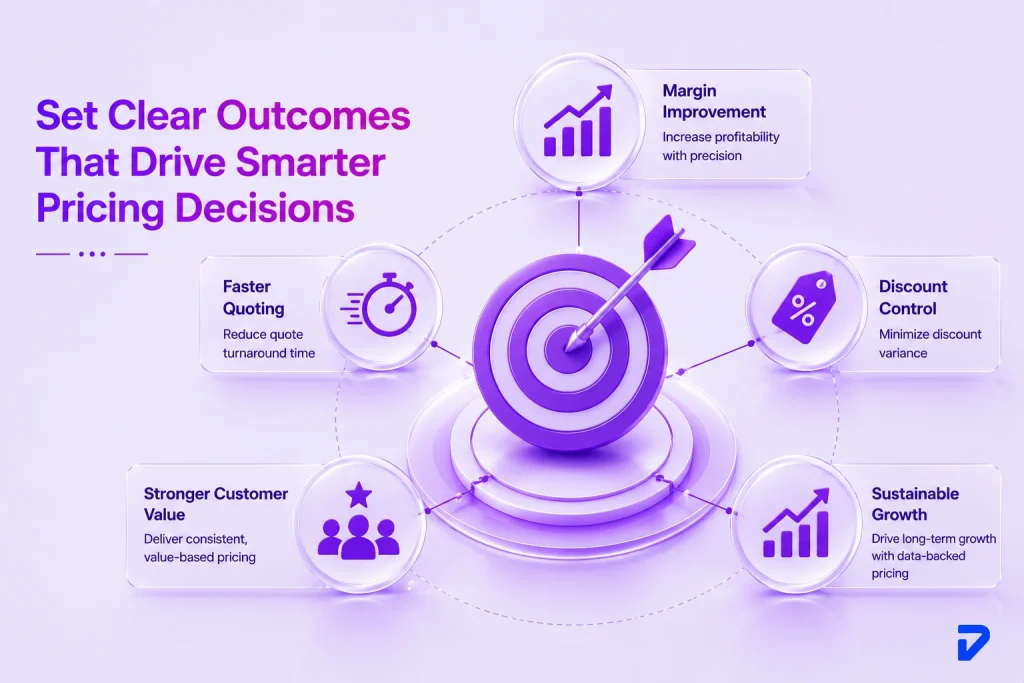
Modern agents run a structured reasoning loop, most commonly variants of ReAct or Plan-and-Execute. The agent observes its current state, reasons about the next action, executes it via a tool, and incorporates the result before deciding what to do next. Around this loop, four pieces separate a working agent from a demo.
Memory provides continuity across steps and sessions, usually split between a short-term scratchpad and long-term storage in a vector database. A tool registry defines what the agent can touch, scoped to specific OAuth permissions or service accounts. Guardrails handle policy enforcement, from refusal rules to spend caps. Observability captures every reasoning trace for replay, evaluation, and audit.
Traditional AI at a Glance
Traditional AI covers the model architectures most teams already run in production: classification systems, recommendation engines, fraud scorers, forecasting models, and standard LLM chatbots. Each accepts input, runs a single forward pass, and returns output, with no plan, no recovery path, and no persistent memory beyond the current request.
A SaaS churn model scores one account at a time. A fintech fraud detector decides on a transaction-by-transaction basis. A retail recommender ranks one product list per page view. For tasks with a fixed input shape, predictable latency, and well-defined success criteria, this design is fast, cheap, and reliable. The ceiling shows up when a workflow needs judgment to be chained across multiple systems.
Difference Between Agentic AI and Traditional AI
| Dimension | Traditional AI | Agentic AI |
| Trigger | Single request from a user or upstream system | A goal handed in from a queue, schedule, or trigger event |
| Reasoning | One forward pass through the model | Multi-step plan with re-planning when steps fail |
| Memory | Stateless, or limited to the current context window | Persistent: short-term scratchpad plus long-term vector store |
| Tool use | None, or a single hard-coded integration | Dynamic function calling across APIs, databases, and files |
| Adaptability | Degrades on inputs outside the training distribution | Reroutes, retries with a different tool, or escalates |
| Human role | Operator queries, model responds | Supervisor sets goals, reviews exceptions, audits traces |
| Typical output | A score, label, or single message | A closed ticket, completed claim, or committed transaction |
| Industry example | Healthcare ICD-10 coding suggestion | Healthcare prior-auth agent that submits and tracks the request |
| Cost profile | Low setup, flat per-call run cost | Higher build, lower long-term cost per outcome |
Autonomy and Initiative
Traditional AI is reactive: the user asks, the model answers, and the loop terminates. Agentic AI inverts that posture; you hand it an outcome, and it picks the path. A SaaS support team running a traditional model uses it to draft a single canned reply when an agent clicks “suggest response.”
Add agentic logic on top, and the same team gets a system that triages the incoming ticket against past similar cases, queries the product API for the customer’s plan and usage history, drafts a response, attaches the relevant runbook, and routes anything ambiguous to a tier-two engineer with full context already gathered.
Reasoning and Planning
Traditional AI resolves a problem in one shot, with no plan to inspect or correct. Agentic AI uses chain-of-thought reasoning to decompose a goal into ordered sub-tasks, each capable of calling a different tool. A fintech onboarding agent processing a new business customer runs a KYB lookup against a registry like Companies House.
Besides, it screens directors against an OFAC sanctions list, reconciles the entity name across registration documents and bank statements, and flags discrepancies with a confidence score and a citation back to the source. If the registry is rate-limited, the agent backs off and retries. If a director match is ambiguous, it surfaces both candidates rather than leaving it to guesswork.
Adaptability to Edge Cases
Traditional AI breaks the moment input drifts outside its training distribution. A logistics dwell-time forecaster trained on clean carrier data misfires the moment a carrier sends malformed timestamps or switches reporting cadence. An agent handles that drift by treating each step as a decision, not a function call.
If a primary data source returns garbage, the agent reaches for an alternative, retries with adjusted parameters, or escalates with the partial information already collected. A logistics exception-handling agent investigating a shipment delay can pull tracking from the carrier API, fall back to scraping the carrier’s public portal if the API times out, and message the broker for confirmation, all before flagging the case to operations.
Tool Use and Integration
Traditional AI lives entirely inside the model. Agentic AI reaches outside it through function calling, the capability that lets a model emit a structured request to call an external function, receive the result, and continue reasoning. This single feature is what makes the agent useful across the five or six systems most workflows actually touch.
Multi-agent architectures extend the idea by assigning specialized roles to different agents that pass context forward. A retail merchandising team might run a researcher agent gathering competitor pricing, an analyst agent identifying margin opportunities, and a planner agent generating recommended price moves with expected lift, each handing structured artifacts to the next.
Not sure whether your workflow needs an agent or a plain model?
Pinnasys runs a 30-minute architecture review that maps your process to the right approach. Book a discovery call today!
Core Components of Production-Grade AI Agents
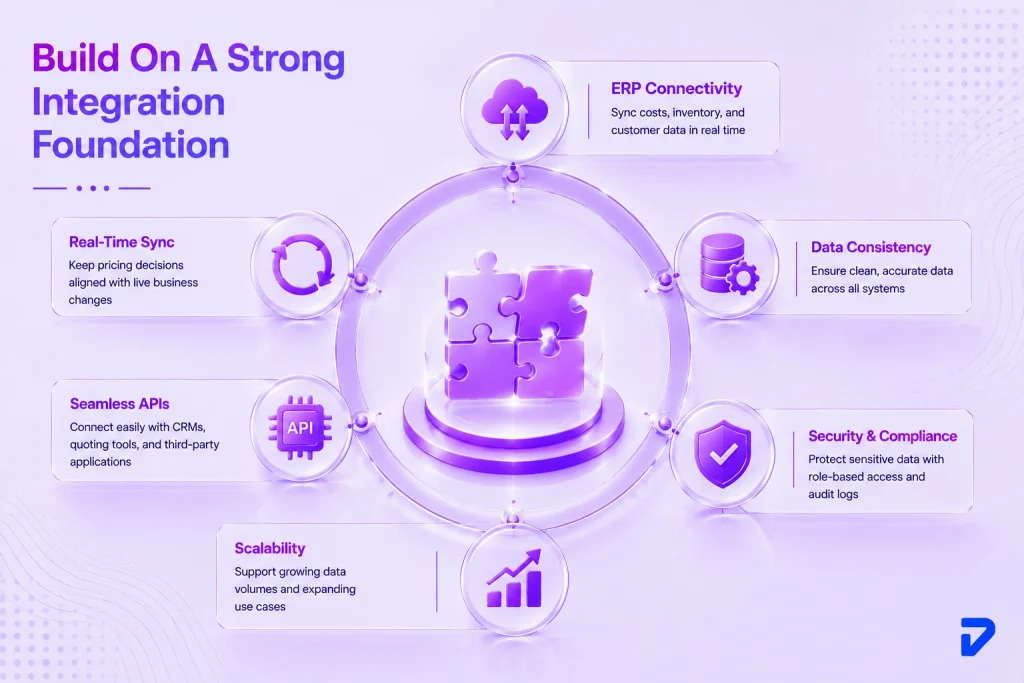
A production agent rests on four architectural layers. Underinvesting in any one is the most common reason pilots fail to graduate.
The Planner
The planner is the reasoning core, responsible for decomposing a goal into subtasks and choosing which run in what order. Most modern planners sit on top of a frontier reasoning model like GPT-4 class, Claude, or Gemini, extended with structured techniques such as ReAct, Plan-and-Execute, Tree-of-Thoughts, or reflection loops that critique and revise an in-flight plan. The hallmark of a strong planner is graceful failure handling. When a tool errors out, it logs the failure, picks a different strategy, and continues toward the goal rather than retrying the broken call until the budget drains.
Memory and Context
Traditional AI has no memory once the response is sent. Agents need two distinct memory systems. Short-term memory holds the running state of the current task, including intermediate tool results and the reasoning trace behind the latest decision. Long-term memory captures user preferences, past outcomes, and patterns the agent has accumulated across sessions, typically split between a vector database for semantic recall and structured storage for facts the agent must retrieve exactly. The hard problem here is retrieval, which is why production agents almost always run RAG pipelines underneath. Pinnasys’s custom AI development team treats this layer as the first thing to design.
Tool Layer and Guardrails
The tool layer defines every API the agent can call, every dataset it can read, and every action it can commit on your behalf. Each tool is registered with a schema, scoped to a specific OAuth permission or service account, and rate-limited at the integration boundary. Guardrails sit alongside it and define what the agent cannot do, regardless of what its planner decides. A fintech agent might be capped at $500 per transaction, blocked from posting to any external counterparty without a human approver, and prohibited from writing to any database outside business hours. Without guardrails, agents drift, and the drift gets expensive.
Observability and Evaluation
Every action an agent takes should be traceable, replayable, and measurable. Production teams capture the full reasoning trace for each run, the tool calls made, the data returned, and the outcome, written into a structured log designed to be queried later. On top of that, evaluation frameworks measure metrics specific to agentic systems: task completion rate, tool-call accuracy, recovery rate from failed steps, and the faithfulness of the final output to the underlying data. Without this layer, an agent is a black box that costs real money and produces real consequences.
When to Use Agentic AI and When to Stick With Traditional AI
When Agentic AI Wins
Agents earn their setup cost when the workflow has multiple steps, touches several systems, and requires judgment that a rule engine cannot encode. A SaaS customer success team drowning in renewal analysis is a strong fit, because the work spans CRM data, product usage telemetry, support history, and billing records, and the answer is an opinion rather than a number. Reach for an agent when:
- The workflow spans three or more systems in its natural execution path.
- The destination matters more than the exact route taken to reach it.
- Edge cases and unusual inputs are the rule, not the exception.
- The current process consumes 30-plus hours a week of skilled human time.
- A human-in-the-loop checkpoint is acceptable on ambiguous cases.
The teams that realize the upside redesign the workflow around the agent’s strengths, rather than wrapping an agent around an unchanged process.
When Traditional AI is the Better Call
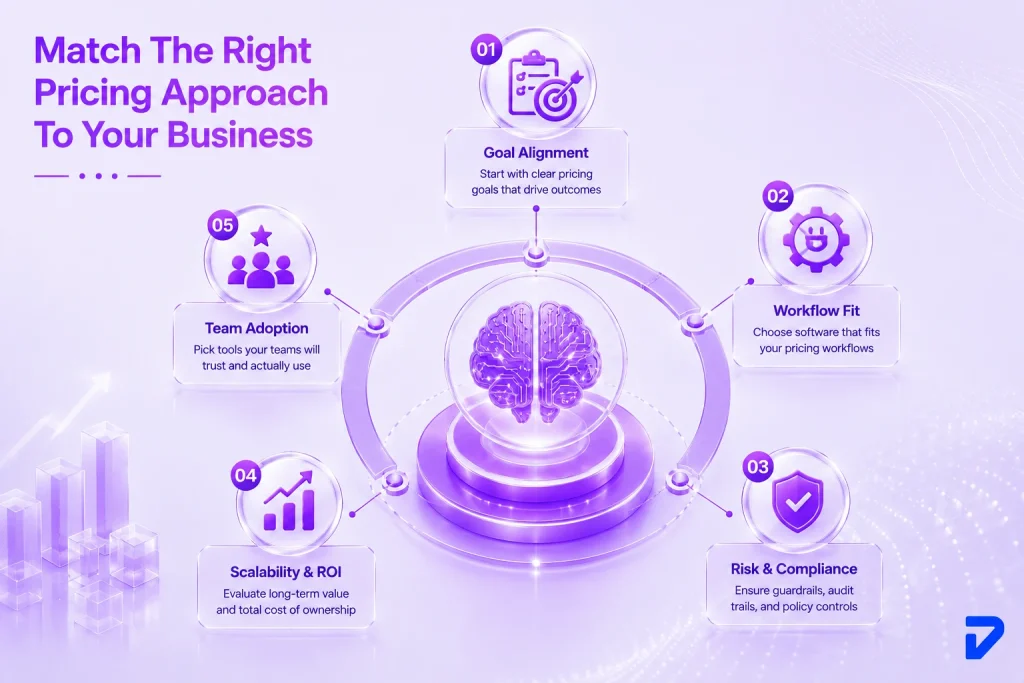
Not every workflow deserves an agent, and defaulting to one is partly why Gartner expects over 40% of agentic AI projects to fail by 2027. Pick traditional AI when:
- A single classification, score, or response is the entire job.
- Latency and cost have to be tight, predictable, and defensible per request.
- Compliance forbids autonomous actions without a human in the loop.
- The workflow has fewer than two meaningful decision points.
- A rule engine, RPA system, or fine-tuned classifier already solves it cheaply.
The discipline is to match the architecture to the actual shape of the work, not the shape of the hype cycle. Most retail product recommendation systems do not require agents. Most fintech transaction scorers do not either. Pinnasys’s AI consulting services team runs the fit assessment before any code gets written, which is usually the cheapest hour you will spend on the project.
The Bottom Line
Agentic AI represents a structural shift from request-driven to outcome-driven AI, reshaping what your team must build, govern, and measure. Traditional AI continues to win on narrow, high-volume tasks where predictability is the entire point. Agents earn their cost on multi-step, multi-system work where the destination matters more than the path.
Mature programs use both, carefully scoped to the jobs each handles well. Pinnasys designs production-grade agents for SaaS, fintech, healthcare, legal, retail, and logistics teams that need more than a proof of concept. If you are evaluating where agentic AI fits in your stack, our agentic AI services team can scope the smallest useful pilot. Book a discovery call to start.
Key Takeaways from the Article
- Architecture beats hype: pick agents for outcomes, traditional AI for answers.
- The planner, not the model, decides whether an agent survives production.
- Memory, retrieval, and observability are the layers most teams underbuild.
- Guardrails turn a clever demo into a system worth shipping to customers.
- Most failed agentic projects solved problems that did not require an agent.
Frequently Asked Questions
What does it actually cost to run an agentic AI project?
A scoped pilot typically lands between $30,000 and $120,000, depending on integration depth. Monthly run costs track LLM tokens, tool calls, and memory storage, and typically range from $500 to $5,000 for a moderately active production agent at startup scale.
Does agentic AI replace RPA, or do the two work together?
Agents complement RPA far more than they replace it. RPA handles high-volume, rule-based clicks reliably and cheaply. Agents handle judgment, unstructured inputs, and edge cases. The strongest stacks use RPA for repetitive tasks and agents for decision-making.
Can agentic AI be deployed safely in regulated industries?
Yes, provided the guardrails are designed before the agent ships, not bolted on afterward. Scoped tool access, approval workflows, audit logs, and human-in-the-loop checkpoints make agents viable across finance, legal, and healthcare. Safety is a governance decision.
How long does it take to build a working AI agent?
A usable first version typically ships in four to eight weeks once the scope is clear. Hardening to production quality, with evaluation, guardrails, and monitoring, takes another three to five months. Complexity scales with the number of tools, integrations, and edge cases involved.
Should I start with a single agent or a multi-agent system?
Start with a single agent every time. Graduate to multi-agent only when one agent becomes a context bottleneck, or when distinct roles clearly emerge, like researcher and writer. Multi-agent designs add coordination overhead and should be earned, never assumed upfront.




Prakash C. Saini
Prakash Saini is the Founder & CEO of Pinnasys. With over a decade in digital transformation and building production systems, he grew an engineering team from 2 to 50 people and has led the delivery of 100+ production digital systems. Products built under his leadership have raised millions in funding and generated over $50 million in revenue. He holds an Executive MBA from IIM Kozhikode and today leads the AI engineering team at Pinnasys.