Category: AI integration

  • Top 6 MLOps Best Practices for Scalable ML Deployments

    Top 6 MLOps Best Practices for Scalable ML Deployments

    Most ML models stall before production, not because the math is wrong, but because nobody owns the pipeline after training. Versioning, automation, and monitoring are what move models from prototype to live system.

    Modern organizations rely on AI for real-time operations, large-scale automation, and faster decision-making. The problem, however, is that insufficient infrastructure, inefficient monitoring, and ineffective operations hinder their efforts to deploy their machine learning models. Here, MLOps comes into play to maintain the innovation cycle and reliability of your models. 

    Whether you’re implementing or scaling machine learning, an effective ML deployment matters the most. In this guide, we will cover the most effective MLOps best practices and how to approach the deployment. Before we proceed, let’s start by understanding what MLOps actually means and see what comes around. 

    What is MLOps?

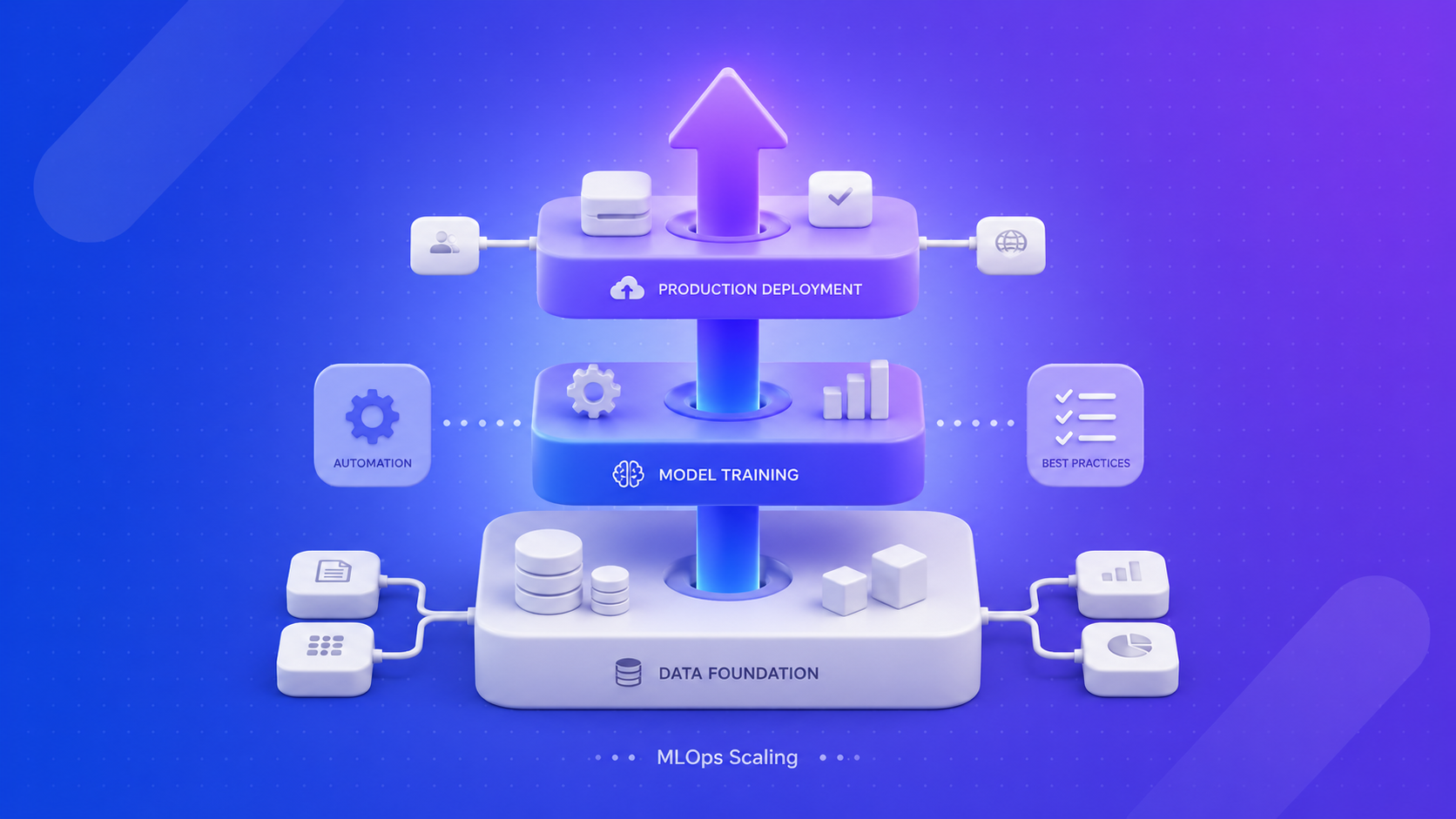
    Machine Learning Operations (MLOps) is defined by processes that automate and govern the complete machine learning lifecycle, from ingestion through training, testing, deployment, monitoring, and finally, retraining. This acts as DevOps for AI-powered applications where models grow, and prediction accuracy strongly relies on changing data. MLOps helps data scientists, ML engineers, and IT teams collaborate to keep machine learning models reliable and scalable in production environments. 

    What Has Changed in 2026?

    Contemporary AI-powered applications are increasingly complex and extend well beyond a model that lies behind some API. Production systems have moved from foundation models through retrieval pipelines to fine-tuned adapters and governance layers. At the same time, emerging legislation, such as the EU AI Act, imposes requirements on the transparency and explainability of AI models. Consequently, governance has become one of the crucial components of the MLOps pipeline.

    Why MLOps Matters for Scaling ML Applications?

    Without MLOps, increasing scale increases risk rather than benefit. According to industry research from Azumo and Dataiku, efficient ML operations can reduce the total cost of ownership in ML lifecycles by approximately 40%, along with fielding 2.5 times as many successful models in production. Here are five reasons MLOps is important to achieve scale:

    • Models degrade silently: Accuracy is lost after several weeks without maintenance.
    • Hand re-training will not scale: It will be impossible to track twenty models manually.
    • Regulatory compliance requires provenance: Oversight expects to know the decision-making process.
    • Drift cannot be detected without monitoring: The inputs grow faster than the dashboard refreshes.
    • Ownership failures lead to disruption: Ambiguous transitions between teams result in production downtime.

    In other words, the absence of MLOps is the difference between good and bad AI investment.

    The Core Pillars of Production-Ready ML Operations

    There are certain fundamentals that strong ML operations are built upon. These pillars are institutionalized practices on a platform level, not fragmented scripts.

    • Comprehensive version control across datasets, features, model artifacts, and prompt configurations.
    • Structured ML pipeline orchestration with CI/CD and continuous training workflows.
    • Strong offline-online feature consistency to eliminate training-serving data skew.
    • Real-time ML observability for drift detection, latency analysis, and data quality monitoring.
    • Robust governance frameworks with audit logging, lineage tracking, and role-based access controls.
    • Human-in-the-loop intervention mechanisms for high-risk or business-critical decision scenarios.

    Organizations that approach this as a platform-scale process do so smoothly. Teams that add this as an afterthought have a tough year ahead.

    6 Essential Best Practices to Scale AI Models in Production

    Version Control for Models and Data

    Code versioning alone won’t cut it for machine learning. Data, features, model artefacts, and prompts will all require versioning too. DVC (Data Version Control) and Git LFS are good at handling large data and model artefacts along with your codebase. Without versioning, reproducibility falls apart the second someone leaves the team.

    Basic DVC configuration:

    dvc init
    dvc add data/training_set.csv
    git add data/training_set.csv.dvc
    git commit -m "Track training data v1.2"

    Use DVC alongside an experiment tracking tool like MLflow or Weights & Biases to store experiment metadata. Every model artefact should answer three basic questions: which data trained it, what code generated it, and what scores did it achieve.

    Automated Model Training Pipelines

    Manually training more than a handful of models is unsustainable. ML pipeline automation helps here by scaling out. Kubeflow Pipelines, Apache Airflow, and Prefect help define a machine learning pipeline as code. Each run is reproducible, scheduleable, and version-controlled.

    Pipelines trigger on actual signals: drift thresholds crossed, model performance below some floor, or scheduled cadences for fast-paced domains. A recommendation system may retrain every week. 

    CI/CD for Machine Learning Models

    The CI/CD pipeline for ML builds on that of software engineering by adding two more steps to the process, namely data validation and model validation. In your pipeline, you should build the model artifact, run unit tests, validate the data schema, train on the data set, evaluate the model candidate, and promote it if it outperforms the baseline.

    stages:

     - lint_and_test
     - validate_data
     - train_model
     - evaluate_against_baseline
     - deploy_to_staging
     - canary_deploy_production

    The build blocks promotion of each stage. In one step, you’ve covered nearly all sources of production issues.

    Model Monitoring and Drift Detection

    Accuracy is vanity in production. Proper ML monitoring covers data drift, concept drift, prediction drift, latency, throughput, fairness, and cost per inference. For LLM-driven applications, we have hallucination rates, grounding scores, and human preference metrics.

    Evidently AI, Arize, and WhyLabs are among the tools used in real-time detection of distribution shifts. Assign each alert to a dedicated engineer on call. According to McKinsey’s analysis, model decay results in millions of dollars in lost ROI in enterprise deployments annually. 

    Scalable Infrastructure with Containerization

    Containerization allows portability, reproducibility, and elasticity in model deployment. Pack the model code and its dependencies in a Docker container. Run on top of Kubernetes for auto-scaling, reliability, and rolling deployments.

    Basic model-serving Dockerfile:

    FROM python:3.11-slim
    WORKDIR /app
    COPY requirements.txt.
    RUN pip install --no-cache-dir -r requirements.txt
    COPY model/ ./model/
    COPY serve.py.
    EXPOSE 8080
    CMD ["python", "serve.py"]

    Consider combining your containers with serving libraries such as KServe, Seldon Core, and BentoML. These technologies provide the infrastructure for batching, GPU allocation, load balancing, and other essential features.

    Model Governance and Compliance

    Model governance cannot be reduced to bureaucracy. It refers to the documentation and transparency required to make the AI decisions trusted by regulators, customers, and stakeholders. Each production model must have a model card, a classification of the associated risks, an owner, and a retraining schedule.

    Regulatory compliance requires role-based authorization, approval processes, and tracking. The EU AI Act imposes up to 7% fines on worldwide income for non-compliance. Proactively incorporating governance mechanisms into the pipeline is vastly more cost-effective.

    How to Deploy AI Models at Scale?

    Package the Model

    Containerise the model, with all its dependencies, runtime, and version manifest, and treat it as immutable. The image that got through staging is the image running in production. Reproducible builds can be accomplished via Docker, Buildah, or Bazel. Tag every image with the model version, training data hash, and Git commit.

    Validate Before Serving

    Run shadow traffic testing, integration testing, and fairness testing before promotion. Shadow the new model’s predictions against the current one in production using live traffic without serving the new ones. Do not promote if any threshold is not met: accuracy, latency, fairness, or cost per inference. This is where unit tests fail you.

    Choose the Serving Pattern

    Pick the appropriate deployment based on your tolerance for latency, volume of data, and risk profile.

    PatternLatency ToleranceCommon ExampleOperational Risk
    BatchHours to daysScoring/forecastingLow
    Real-Time APIMillisecondsFraud, recommendations, messaging appsHigh
    StreamingSub-second event processingIoT, predictions, anomaliesHigh
    EdgeNear-zero latencyVision, offline commerce, medical devicesMedium

    In reality, most AI systems in production use at least two. Retailers will typically run batch scores and then re-rank customers in real-time.

    Roll Out Progressively

    Kick off the process with a 5% traffic load. Measure accuracy, latency, and error budgets for a certain period. Expand to 25%, then 50%, only after metrics remain in the safe zone. For mission-critical models, like healthcare or financial services, run both shadow and canary simultaneously. The shadow validates predictions quietly, while the canary validates their effect on users progressively.

    Wire the Monitoring Layer

    Track model drift, latency, fairness, and cost per inference from day one. Make sure every single alert has an assigned owner. Integrate monitoring into the incident response process, not another dashboard that people do not use. Tools such as Prometheus and Grafana will give you infrastructure-level monitoring. Evidently, or Arize will track your model-specific metrics. You need both.

    Plan Rollback and Retraining

    Pre-position the previous model version to roll back within seconds. Automate the drift alerts and make sure they automatically kickstart the retraining process if metrics exceed the pre-set threshold. A good rollback in 90 seconds will beat a clever fix in three days. Write a runbook for rollback before the incident, not during it.

    Ready to scale your AI systems with confidence?

    Connect with our AI integration and governance specialists today to build a reliable, production-ready MLOps framework that reduces operational complexity and accelerates deployment success.

    Common MLOps Implementation Pitfalls

    Models Built In Different Libraries/Languages/Stacks

    Data scientists tend to use whatever framework they feel is the most efficient: scikit-learn, PyTorch, TensorFlow, XGBoost, and JAX, among others. Each of these frameworks has its serving format, dependency graph, and monitoring peculiarities. Hence, a zoo of individual deployments emerges that no one can maintain anymore. 

    Scaling AI/ML = Scaling Staff to Support AI

    Every new model in production requires monitoring, retraining, incident handling, and periodic audits. Without the necessary platform infrastructure, operational costs will grow linearly with every additional model. Clever teams invert this growth function by investing in platforms such as feature stores, automated machine learning workflows, and self-service deployment of models. 

    Models Requiring Dynamic Endpoints

    Some models require variable input parameters, varying combinations of features, and specific postprocessing for each request. Otherwise, hardcoding these rules in the serving layer will create fragile endpoints that will fail upon every change to the product specifications. Instead, use feature stores, dynamic configuration, and routing layers such as KServe or Seldon.

    Lack of AI Governance

    Untagged models, unclaimed models, and models with no audit log are potential disasters waiting to happen. If regulators ever ask why a loan application was declined or a claim was flagged, “because the model said so” is never a satisfactory answer. Therefore, include governance capabilities in your data pipeline.

    The Bottom Line

    MLOps is the field where investments in AI result in success. It’s not the most complex algorithms that win on the production side; it’s versioning, automation, monitoring, and accountability. Following ML best production practices can no longer be an option but rather a matter of survival for small businesses and startups. At Pinnasys, our AI integration and governance specialists help founders manage their ML systems sustainably. Interested in deploying ML successfully? Let’s talk to our AI architects about your MLOps strategy.

    Key Takeaways from the Article

    • ML projects tend to break in production but not during R&D phases.
    • Versioning, automation, and monitoring comprise the true MLOps core.
    • Make sure to match deployment patterns with latency, volumes, and risks.
    • Data, model behavior, and performance should be monitored together.
    • Strong ownership is more important than smart solutions.

    Frequently Asked Questions About MLOps Best Practices

    How is MLOps different from LLMOps?

    MLOps covers the full lifecycle for traditional ML models. LLMOps adds prompt versioning, RAG pipeline monitoring, hallucination detection, eval frameworks, and token cost tracking. LLMOps is a specialized layer on top of MLOps, not a replacement for it.

    What team size do you need to run MLOps in production?

    Less than you might think. Two people: one ML engineer and one platform engineer, suffice to create a functional MLOps infrastructure. That applies to fewer than ten models. If you have more, then separate platform, data, and governance roles are required.

    Which MLOps tools work best for a small AI team?

    The most common tool stack for small organizations includes either MLflow or Weights and Biases for experiment management. Combined with a managed serving layer (SageMaker, Vertex AI, Databricks) and basic monitoring using Evidently or Arize. 

    How often should production AI models be retrained?

    It depends on domain velocity. Fraud and e-commerce models often retrain weekly or daily. Compliance and risk scoring models retrain monthly or quarterly. Trigger retraining on drift thresholds when possible, not just calendar schedules.

    Is MLOps necessary for SMBs running just two or three models?

    Yes, in a lighter form. You still face drift, retraining, and audits regardless of the number of models. Start with a minimal stack for your first few models: versioning, monitoring, and one rollback path. Extend as the number grows.
  • AI Governance Framework – How to Implement Responsible AI?

    AI Governance Framework – How to Implement Responsible AI?

    AI governance helps organizations build ethical, secure, and compliant AI systems while reducing risks related to bias, privacy, and accountability. Responsible AI implementation also requires continuous monitoring, governance policies, and human oversight throughout the AI lifecycle.

    Artificial intelligence is rapidly moving from experimentation to enterprise-scale adoption across industries. From automation and predictive analytics to generative AI tools, organizations are increasingly relying on AI for critical business operations. According to Gartner, the use of AI-powered autonomous agents is expected to grow significantly in the coming years.

    As AI adoption accelerates, concerns around bias, privacy, transparency, security, and compliance continue to increase. Governments and organizations worldwide are introducing frameworks and regulations to encourage responsible AI development and reduce potential risks. 

    What is AI Governance?

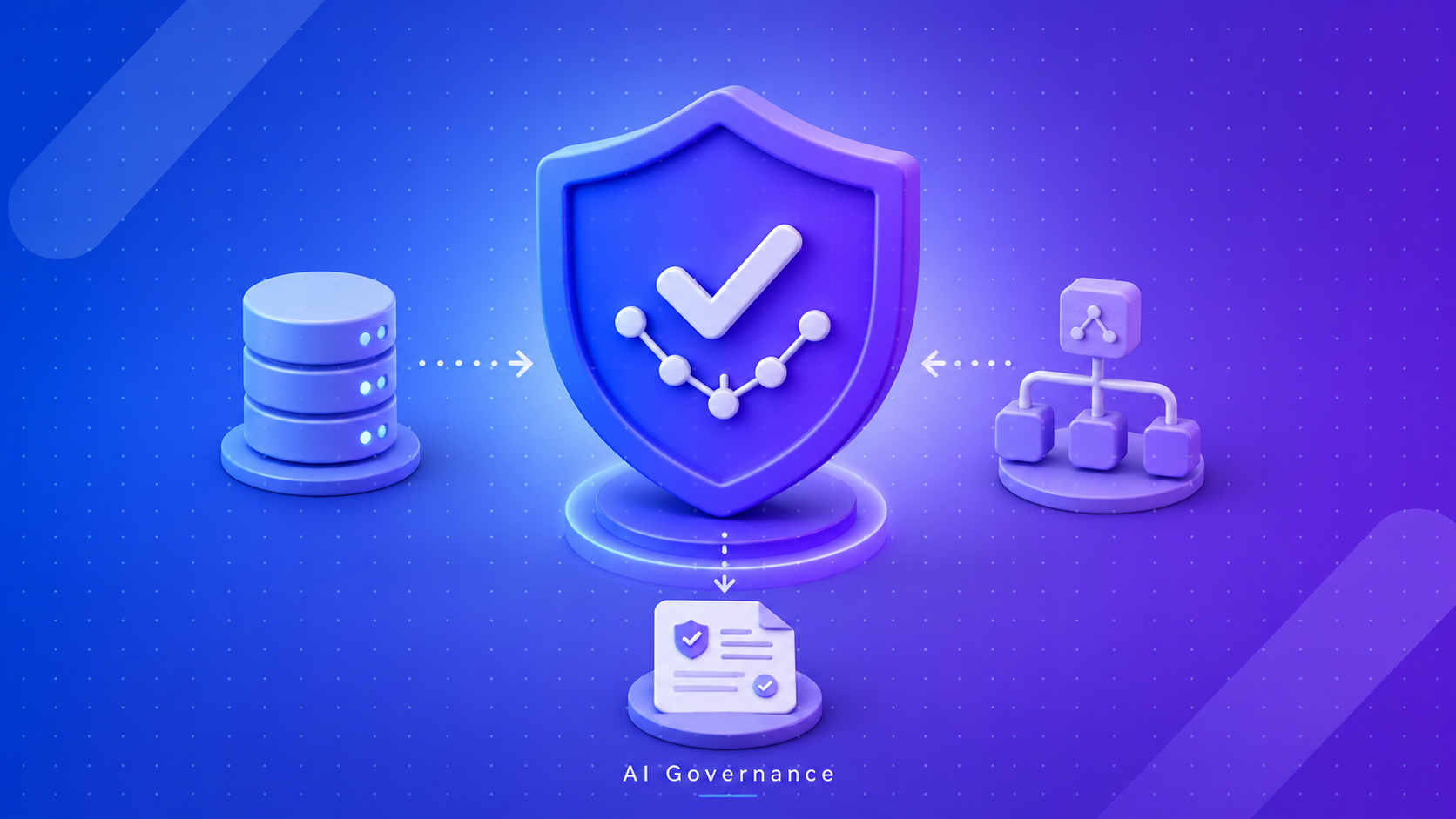
    AI governance is the established set of rules and practices by which artificial intelligence applications will be controlled and their usage, deployment, and design guided by human values and relevant considerations. The established practices and processes by which the creation and usage of AI applications can be controlled and guided are known as AI governance. AI governance allows the creation and usage of AI to manage possible risks of artificial intelligence.

    Why Does AI Governance Matter?

    • Helps reduce risks related to AI bias, privacy, security, and inaccurate outputs.
    • Ensures AI systems remain ethical, transparent, accountable, and compliant.
    • Builds trust in AI technologies while minimizing legal, operational, and reputational risks.
    • Supports responsible AI adoption across business operations and decision-making.
    • Helps organizations adapt to evolving global AI regulations and compliance requirements.
    • Strengthens explainability and auditability across AI-driven business workflows.

    Key AI Governance Frameworks, Standards, and Regulations

    EU AI Act

    The EU AI Act is among the world’s first broad regulations for AI. It provides a system to manage AI risk and imposes stringent requirements for compliance with high-risk AI systems, like those within healthcare, finance, employment, and public services.

    UK Pro-Innovation AI Framework

    The UK Pro-Innovation AI Framework promotes responsible AI adoption through sector-specific guidance instead of a single centralized AI law. The framework focuses on innovation, accountability, transparency, fairness, and safety while allowing regulators to apply AI governance principles within their respective industries.

    Executive Order on AI

    The AI Executive Order proposed by the US government centers on safety issues, national security concerns, privacy issues, and responsibility in innovation. It promotes the idea that AI companies should have better testing, risk assessment, and transparency policies.

    NIST AI Risk Management Framework

    This framework is used to assist an enterprise in identifying, assessing, managing, and monitoring the risks of an AI system throughout its lifecycle. Organizations tend to apply the NIST AI risk management framework to better enhance AI governance and accountability, and bring AI systems in line with responsible AI.

    AI Bill of Rights

    The AI Bill of Rights offers advice on how to protect individuals from dangerous or discriminatory AI applications. The basic tenets include safe utilization of AI, algorithmic fairness, data protection, transparency, and access to human options in situations where automation affects significant choices.

    U.S. State Regulation

    Several US states have passed and are proposing specific AI laws, regulations, and obligations related to privacy, automated decision-making, and consumer protection. These regulations continue to be developed at the state level in response to increased use of generative AI and machine learning

    OECD AI Principles

    These internationally driven principles emphasize the importance of a human-centered and trustworthy development of AI systems. The principles also promote responsible AI innovation and include criteria regarding transparency, accountability, robustness, and sustainability for the public and private sectors. 

    UNESCO AI Ethics Framework

    The framework emphasizes that responsible use and adoption of AI are guided by principles and measures consistent with human rights, human autonomy, inclusiveness, and diversity, and that ensure the use of AI is for the common good and addresses potential risks.

    ISO/IEC AI Governance Standards

    The ISO/IEC AI governance standards, such as ISO/IEC 42001, help organizations to implement a formal AI management system and its process that ensures compliance with relevant regulations, establishes responsibility and control mechanisms, and manages AI risks securely. 

    Core Principles of Responsible AI Governance

    Transparency and Explainability

    Organizations must ensure that an AI system can explain its outputs and processes that allow a stakeholder to follow the logical path for decision-making to the end. Understanding the process of decision-making increases confidence and assurance that conditions can be met and findings explained. 

    Accountability and Human Oversight

    The accountability across the entire AI life cycle should be established by means of setting responsible individuals and a governance structure. Human control continues to play an essential role in reviewing AI systems’ findings on complex or potentially detrimental decisions. 

    Fairness and Bias Mitigation

    Responsible AI principles should cover fairness tests and bias detection, as well as training datasets that consist of an appropriate variety and diversity to limit discriminatory results. Model validation processes will enable the development of fair systems and accurate outputs. 

    Privacy and Data Protection

    Organizations should ensure that sensitive business and customer data processed by an AI system is protected by the governance rules through access control mechanisms, encryption, secure data storage, and consent management. Strong privacy controls also support regulatory compliance.

    Security and Resilience

    AI systems should include cybersecurity protections against prompt injection attacks, data leakage, adversarial threats, and unauthorized access. Continuous monitoring strengthens AI safety and operational resilience.

    What would it cost your business if your AI system failed compliance tomorrow?

    Governance is the one pillar teams defer until something goes wrong. By then, it’s the only topic anyone wants to discuss. Pinnasys builds governance before launch, not after the incident.

    Step-by-Step Process to Implement Responsible AI

    Step 1: Establish the Purpose and Scope of AI Governance

    The starting point is to explain why governance of AI is needed and for what AI systems the governance policy applies. Knowing and defining clear business goals, regulations, appetite for risk, stakeholders, and requirements sets the right foundation for governing AI.

    Step 2: Design the Governance Framework

    Once the scope is determined, a company can construct the governance structure that includes policies, responsibilities, accountability, and decision-making mechanisms. A properly constructed system will align the leadership teams, compliance team, data scientists, and security professionals.

    Step 3: Develop AI Standards

    After having established the governance structure, there are required rules within each of the organizations for data quality, model design and testing, explainability, documentation, and security. Through the consistent application of AI rules, we will have control over the trustworthiness, explainability, and legality at all levels of the AI life cycle.

    Step 4: Build one AI system

    Once the AI is governed by one central system, companies can view their models, data, approvals, and audits all in one central location. With one view of AI, you can control and manage your AI and reduce the chance of unofficial or ungoverned AI models in the business.

    Step 5: Create Risk Management Framework

    The centralized nature of this government system allows the organizations to flag and evaluate biases, cybersecurity, privacy, model drift, and regulation-based risks. Structured risk management approaches make the teams’ abilities to identify risks and implement countermeasures easier and earlier.

    Step 6: Integrate AI Governance into AI Development

    It is best to involve governance in both the design and operation stages of the AI development process. The design of AI has to follow governance guidelines. Training of AI, data collection, tests, implementation, maintenance, etc., all need to follow the governance policy. 

    Step 7: Real-time Monitoring and Accountability

    Organizations implement constant monitoring in order to keep track of AI performance, monitor abnormalities, ensure regulatory compliance, and hold AI accountable after implementation. Audit trail, human intervention, alert generation, and incident management all help with the accountability part. 

    Step 8: Review, Improve, and Scale the AI governance 

    AI governance is something that needs constant adaptation and improvement as regulations, technology, and business needs change. Regular review, employee training, governance policy updates, and governance assessment will enable organizations to maintain robust, responsible AI practices while scaling up AI adoption in an enterprise.

    What are the Best Practices for Effective AI Governance?

    Establish an AI Ethics Board or Committee

    Establish an AI Ethics Board to ensure responsible use, compliance, and accountability throughout AI initiatives. Cross-functional teams composed of legal professionals, compliance officers, security specialists, executives, and data scientists will be able to analyze AI risks, review high-impact applications, and formulate policies that align with ethical AI adoption.

    Integrate Bias Detection and Mitigation Measures

    AI systems trained on incomplete or unbalanced datasets can produce discriminatory or inaccurate outcomes. Regular bias testing, fairness assessments, diverse training data, and human oversight help organizations reduce algorithmic bias and improve the reliability, inclusiveness, and transparency of AI-driven decisions.

    Perform Regular AI Audits and Assessments 

    Audits help businesses uncover security, compliance, drift, and operational risks before they become critical problems; internal and external reviews and performance assessments enhance transparency and risk management efforts.

    Ensure Transparency with Data Collection and Usage

    Data sourcing, consent management, model training, and AI decision processes should be thoroughly documented to gain the trust of users, regulators, and other stakeholders. Transparent data practices also aid in regulatory compliance and improve system explainability.

    Incorporate Human-in-the-Loop Systems 

    Such systems remain necessary in highly sensitive fields like health care, finance, law, and human resources. The incorporation of approval workflows, escalation protocols, and expert review processes ensures that organizations retain control over their AI-driven decisions and minimize the risk of undesirable outcomes.

    Continuous AI Monitoring and Drift Detection

    Over time, the accuracy and reliability of AI models will begin to degrade; constant monitoring, drift detection systems, and automated alerts will enable organizations to ensure continued performance, accuracy, and compliance.

    AI Governance Challenges in Generative AI and Large Language Models

    Hallucinations and Inaccurate Outputs

    Large language models can generate misleading, inaccurate, or fabricated responses that may affect business operations and decision-making. Human oversight, validation workflows, and continuous monitoring help organizations reduce the impact of AI hallucinations in real-world environments.

    Prompt Injection and AI Security Risks

    These attacks can make AIs do what was not expected of them and expose certain sensitive data. AI governance strategies need to incorporate various elements like access control mechanisms, content filtering and security testing, and monitoring mechanisms to secure AIs and diminish the overall cybersecurity risks associated with these technologies.

    Data privacy and compliance risks

    Due to the sheer amount of enterprise and client data that they operate with, generative AI solutions pose data leak and compliance risks for enterprises. Clearly defined governance policies around storing, retrieving, and encryption of data are imperative to protect customer data privacy and enterprise security and compliance.

    Third-Party AI Vendor Governance

    Businesses often outsource AI providers and utilize AI cloud platforms to manage generative AI deployment. Due to operational and regulatory risk considerations when using third-party AI, organizations have vendor assessment, compliance reviews, security assessment, and contractual governance as ways to mitigate risks when using third-party AI.

    Human Oversight of Generative AI

    Human verification of AI-generated results is important across industries, including healthcare, finance, cybersecurity, law, and human resources. Workflow approval and expert review systems work to make organizations accountable and increase confidence.

    Key Takeaways

    • AI governance helps organizations build secure, ethical, and compliant AI systems across the entire AI lifecycle.
    • Strong governance frameworks reduce risks related to bias, privacy, transparency, and regulatory compliance.
    • Continuous monitoring, risk management, and human oversight remain essential for responsible AI adoption at scale.

    The Bottom Line

    AI governance is mandatory for all organizations that are building or implementing AI solutions at scale. Having a sound governance structure enables the organization to mitigate the risks of security, compliance, transparency, and accountability. It ensures that you are building an AI solution that can be trusted. 

    We at Pinnasys understand the significance of enabling responsible AI at every stage of its life cycle. We integrate AI, innovation, and governance & risk management so businesses can scale AI responsibly & efficiently.

    Frequently Asked Questions About the AI Governance Framework

    Who is responsible for AI governance inside a company?

    AI governance is typically managed through collaboration between leadership teams, compliance officers, IT teams, and data scientists. Many organizations also establish dedicated AI ethics committees or governance boards for oversight.

    How long does it take to implement an AI governance framework?

    The implementation timeline depends on the organization’s size, AI maturity, and regulatory requirements. Basic governance structures may take a few months, while enterprise-wide frameworks can require ongoing development and refinement.

    Does AI governance apply to generative AI and large language models?

    Yes, AI governance is highly important for generative AI and large language models due to risks like hallucinations, bias, privacy issues, and data leakage. Governance helps ensure these systems are monitored, secure, and used responsibly.

    What tools support AI governance and compliance monitoring?

    Organizations use tools such as model monitoring platforms, explainability tools, MLOps solutions, and compliance management systems to support AI governance. Popular platforms also provide features for risk assessment, auditing, and real-time AI monitoring.

  • AI Data Governance: How to Build Secure, Ethical, and Compliant Systems

    Introduction

    As AI systems increasingly drive critical business decisions, the question shifts from “Can we build AI?” to “Should we deploy this AI, and how do we govern it responsibly?” AI data governance has emerged from a technical concern to a strategic imperative; regulatory fines for non-compliance can exceed millions, while reputational damage from biased or insecure AI can devastate brands built over decades.

    Building secure AI systems that maintain compliant AI operations while upholding ethical AI practices requires comprehensive enterprise AI governance frameworks addressing data management, regulatory requirements, risk management, and accountability. This guide provides actionable strategies for establishing governance that enables innovation while protecting your organization and stakeholders.

    Understanding AI Data Governance

    AI data governance encompasses policies, processes, and controls ensuring AI systems use data securely, ethically, and in compliance with regulations throughout the AI lifecycle, from data collection through model retirement.

    Core Pillars:

    • Data Security: Protecting sensitive information from breaches and unauthorized access
    • Compliance: Meeting regulatory requirements (GDPR, CCPA, HIPAA, industry-specific rules)
    • Ethics: Ensuring fairness, transparency, and accountability in AI decisions
    • Quality: Maintaining data accuracy and reliability for trustworthy AI outputs
    • Risk Management: Identifying and mitigating AI-related risks proactively

    Without robust governance, organizations face regulatory penalties, security breaches, biased outcomes, and erosion of customer trust, risks far exceeding AI implementation costs.

    Building Secure AI Systems

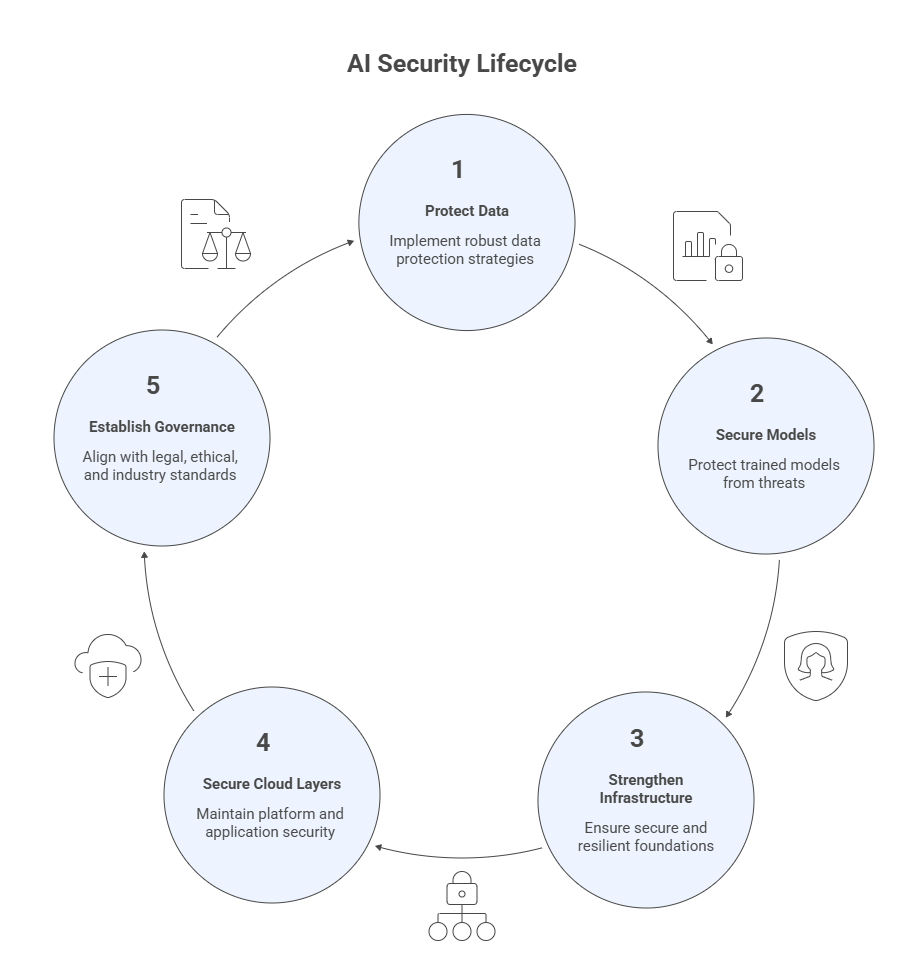
    Security forms the foundation of trustworthy AI, protecting both training data and operational systems. Follow these five essential steps to ensure your enterprise solutions are secure, reliable, and compliant:

    Step 1: Protect Your Data

    Implement robust data protection strategies to safeguard sensitive information throughout the AI lifecycle.

    • Encrypt data at rest and in transit using industry-standard protocols like AES-256.
    • Apply role-based access control (RBAC) with the principle of least privilege.
    • Use data masking, tokenization, and anonymization techniques to protect individual privacy.
    • Regularly audit data storage and access practices to prevent unauthorized exposure.

    Step 2: Secure Your AI Models

    Protect trained models from theft, tampering, and adversarial attacks.

    • Implement model versioning and access logging to track changes.
    • Enforce deployment controls to prevent unauthorized modifications.
    • Monitor for threats such as model extraction, data poisoning, adversarial inputs, and algorithm misuse.

    Step 3: Strengthen Your Infrastructure

    Ensure your AI systems run on secure and resilient foundations.

    • Separate networks to limit access between components.
    • Use intrusion detection tools and regularly scan for vulnerabilities.
    • Set up clear incident response plans to quickly handle any security issues.

    Step 4: Secure Cloud and Application Layers

    When using cloud environments, ensure both platform and application-level security.

    • Leverage cloud provider features such as AWS PrivateLink, Azure Private Link, or GCP VPC Service Controls.
    • Maintain responsibility for securing your AI applications, APIs, and integrations.
    • Monitor cloud environments continuously for suspicious activity.

    Step 5: Establish Governance and Compliance

    Ensure your AI security strategy aligns with legal, ethical, and industry standards.

    • Maintain audit trails for data access, model changes, and AI decision-making.
    • Follow regulations like GDPR, HIPAA, or industry-specific standards.
    • Educate teams on security best practices and enforce strict governance policies.

    Ensuring Compliant AI

    AI compliance frameworks vary by industry and geography, requiring organizations to navigate complex regulatory landscapes:

    Key Regulatory Standards

    • GDPR (EU): Requires data minimization, purpose limitation, right to explanation, and consent management for AI processing personal data. Non-compliance risks fines up to €20 million or 4% of global revenue.
    • CCPA (California): Grants consumers rights to know, delete, and opt out of personal data sales, including data used for AI training.
    • AI Act (EU): Categorizes AI systems by risk level (unacceptable, high, limited, minimal), imposing requirements proportional to risk, conformity assessments, transparency obligations, and human oversight.
    • Industry-Specific: HIPAA (healthcare), FCRA (financial services), COPPA (children’s privacy) add layers requiring specialized compliance approaches.

    Implementing Ethical AI Practices

    Ethical AI practices extend beyond legal compliance, addressing fairness, transparency, and accountability:

    Bias Detection and Mitigation

    AI systems can perpetuate or amplify societal biases present in training data. Responsible AI requires proactive bias testing across protected characteristics (race, gender, age, etc.) and continuous monitoring for disparate impact.

    Mitigation Strategies: Diverse training data, fairness constraints during training, regular bias audits, and human oversight for high-stakes decisions.

    Transparency and Explainability

    Stakeholders deserve an understanding of how AI systems make decisions. Implement explainable AI techniques providing human-readable justifications, particularly for decisions impacting individuals.

    Approaches: LIME, SHAP, attention visualizations, decision trees, and natural language explanations tailored to the audience’s technical literacy.

    Accountability Frameworks

    Establish clear ownership for AI system performance, outcomes, and ethics. Define roles responsible for monitoring, investigating issues, and implementing corrections when problems arise.

    Governance Structure: AI ethics committees, model risk management teams, and executive accountability for AI impacts.

    Also Read : AI Data Privacy for Protecting Training and Inference Data

    Enterprise AI Governance Framework

    Comprehensive enterprise AI governance requires organizational structures, policies, and processes:

    1. Governance Committees

    Create cross-functional teams including data scientists, legal, compliance, security, business stakeholders, and ethics experts, reviewing AI initiatives for risk and compliance.

    Responsibilities: Approving high-risk AI deployments, establishing policies, investigating incidents, and ensuring continuous compliance.

    2. AI Data Management Policies

    Document standards for AI data management covering collection, storage, processing, retention, and deletion. Ensure policies address:

    • Data quality standards and validation procedures
    • Privacy protection requirements
    • Cross-border data transfer restrictions
    • Third-party data usage limitations

    3. Risk Management in AI

    Implement risk management in AI through systematic assessment of potential harms to individuals, operations, reputation, and compliance, before deployment and continuously during operation.

    Risk Categories: Privacy violations, discriminatory outcomes, security breaches, operational failures, regulatory penalties, and reputational damage.

    4. Continuous Monitoring

    Deploy systems tracking AI performance, data quality for AI, compliance adherence, and ethical metrics. Automated alerts enable rapid response to deviations.

    Monitoring Dimensions: Prediction accuracy, fairness metrics, data quality scores, security events, and regulatory requirement changes.

    Also Read : AI Agent Observability Best Practices for Reliable and Compliant Systems

    Conclusion

    AI data governance isn’t overhead; it’s the foundation enabling secure AI systems that deliver value while protecting organizations from regulatory, security, and reputational risks. Building compliant AI through comprehensive enterprise AI governance, combining ethical AI practices, robust AI data management, adherence to AI compliance frameworks and AI regulatory standards, and effective risk management in AI, creates a sustainable competitive advantage.

    Amplework provides AI consulting services to ensure secure, ethical, and compliant AI, combining data protection, transparency, and governance expertise for scalable, reliable, and responsible AI solutions.

  • The Hidden Costs of AI Integration: Infrastructure, Ops, and Organizational Drag

    Introduction 

    Artificial intelligence is gaining rapid attention across industries for its potential to reshape how organizations operate, create, and make decisions. Many teams build impressive prototypes that appear to solve real business problems, but the reality of AI integration costs is often much higher than expected.

    Transitioning from a prototype to a fully deployed, reliable, and cost-effective AI system introduces a range of hidden expenses. The highest costs rarely come from algorithms themselves; instead, they emerge from infrastructure, operational requirements, and organizational friction that quietly increase budgets and delay outcomes.

    Let’s look beyond the demo to understand what really happens when AI meets reality, and how these hidden costs of AI integration impact enterprise AI projects.

    The Three Major Cost Drivers of AI Integration

    The costs of AI integration are primarily driven by three major areas. Understanding them is essential to accurately estimating the cost of implementing AI and avoiding unexpected overruns.

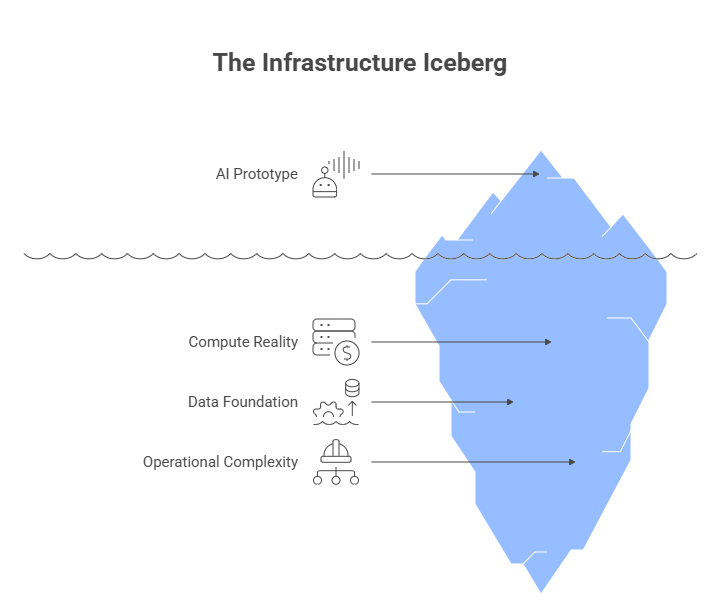
    1. The Infrastructure Iceberg

    What you see in the demo is just the tip of the iceberg. What lies beneath can sink your project.

    The Compute Reality

    Infrastructure costs often grow 10–100× from prototype to production

    • Hardware and compute costs: Modern AI models require GPUs, TPUs, and high-performance servers. Training is a one-time expense, but inference occurs continuously, creating an always-on cost that can dominate budgets.
    • Data infrastructure costs: Scalable pipelines, AI-optimized storage, and cloud infrastructure significantly increase the cost of implementing AI in production.


    Infrastructure costs are often the first, and most visible, component of AI integration costs, yet they are frequently underestimated in initial ROI calculations.

    The Data Foundation

    Data engineering is often the largest and most complex part of AI systems

    • Pipeline and workflow costs: Collecting, cleaning, labeling, and serving data at scale requires real-time ingestion systems, quality assurance workflows, and AI-ready storage.
    • Compliance and governance costs: Privacy safeguards and regulatory requirements further increase expenses.

    These data-related expenses are a hidden but major contributor to enterprise AI costs, often exceeding AI model training and deployment.

    2. The Operations Reality

    Getting a model to work once is a science project. Keeping it working is an engineering challenge.

    From Prototype to Product

    Continuous monitoring and maintenance introduce high recurring costs

    • Model management and monitoring: Version control, drift detection, and retraining pipelines are expensive but necessary to avoid costly failures or incorrect outputs.
    • Governance and compliance: Explainability, audit trails, and regulatory oversight increase recurring operational costs.

    Operational costs often exceed initial development costs if organizations do not plan for ongoing AI maintenance and scaling costs, adding tens of thousands of dollars in hidden monthly expenses.

    The Talent Reality

    Building and maintaining production AI requires diverse, expensive talent

    The spotlight often shines on AI researchers and data scientists, but the operational phase demands different, and often scarcer skills:

    • MLOps Engineers: Build and maintain the production pipelines
    • Data Engineers: Design and optimize data infrastructure
    • AI Security Specialists: Protect against novel vulnerabilities
    • DevOps for AI: Manage the specialized infrastructure

    These roles command premium salaries and are in short supply. Many organizations underestimate both the need and the cost.

    3. The Human Element

    Technology is the easy part. People and processes create the real friction.

    Adoption Friction

    Successful AI integration requires changing workflows, training staff, and fostering trust.

    • Trust and validation: Shadow processes and double-checking outputs introduce hidden labor costs.
    • Workflow redesign: Integrating AI into existing operations requires reskilling employees and increasing organizational change costs.
    • Skill evolution: Marketing, customer service, and analytics roles all require training, adding significant AI talent and training costs.

    The Efficiency Paradox

    Organizational friction can erode projected efficiency gains and inflate costs.

    • A projected 40% productivity improvement can shrink to 15% after accounting for validation steps, approvals, and training periods.
    • Hidden costs in adoption and process changes silently reduce ROI, delaying time-to-value and increasing total expenditure.

    A More Complete Cost Framework

    When evaluating AI projects, consider these often-overlooked dimensions:

    Cost CategoryTypical OversightReality Check
    InfrastructureInitial development computeOngoing inference costs, data storage
    OperationsModel developmentMonitoring, retraining, pipeline maintenance
    TalentData scientists onlyMLOps, data engineering, specialized DevOps
    OrganizationalTechnology implementationChange management, training, process redesign
    ComplianceBasic securityExplainability, audit trails, and regulatory approval

    Understanding the True Cost of AI Integration

    A total cost of ownership (TCO) for AI includes:

    • Infrastructure: $10,000–$50,000 for compute, storage, and cloud scaling (covers GPUs, TPUs, cloud storage, and pipelines for enterprise workloads)
    • Operations: $15,000–$50,000 for monitoring, retraining, MLOps pipelines, and governance per year
    • Talent: $80,000–$120,000 per specialized employee annually (MLOps engineers, data engineers, AI DevOps)
    • Organization: $10,000–$40,000 for workflow redesign, adoption programs, and employee training per project
    • Compliance: $5,000–$20,000 annually for audits, explainability, and regulatory oversight

    Accounting for all three major cost drivers, infrastructure, operations, and organizational drag, allows enterprises to plan realistic budgets and avoid unexpected overruns.

    Also Read : Generative AI API Integration: How to Embed LLMs into Your Existing Workflows

    Strategic Approaches

    Effectively managing the hidden costs of AI integration requires planning across multiple dimensions. Let’s discuss the best strategies to control infrastructure, operations, talent, compliance, and organizational change.

    1. Start with the Foundation: Invest in robust data infrastructure early. Clean, accessible, and well-governed data reduces unexpected costs later, accelerates AI initiatives, and lowers overall AI integration costs.
    2. Build for Operations from Day One: Design systems assuming your prototype will need to scale. Include monitoring, retraining pipelines, and automated workflows to minimize AI maintenance and scaling costs.
    3. Budget for Human Factors: Allocate resources for training, change management, and workflow redesign. Neglecting adoption and reskilling can silently inflate organizational drag costs.
    4. Measure Total Cost of Ownership (TCO) Clearly: Track all AI costs, infrastructure, operations, talent, compliance, and organizational overhead, not just model accuracy, to make informed budget decisions.
    5. Plan for Compliance and Risk: Incorporate explainability, audit trails, and regulatory oversight from the start. Early planning prevents costly retrofits and ensures smoother deployment, reducing hidden governance costs.

    Also Read : How to Integrate AI into Your Existing Systems and Stay Competitive

    The Path Forward

    Successfully deploying AI requires understanding and managing the hidden costs of AI integration, including infrastructure, operations, talent, and organizational change. Planning for these costs upfront ensures scalable, reliable, and cost-effective AI with maximum ROI.

  • Choosing the Right AI Integration Platform: iPaaS, Custom Middleware, or Native AI?

    Introduction

    Your AI model works brilliantly in isolation, but production deployment requires integrating AI with enterprise systems spanning CRM, ERP, data warehouses, and legacy applications. The AI integration platform you choose determines whether deployment takes weeks or months, costs thousands or millions, and succeeds or stalls in integration complexity. Understanding the iPaaS vs custom middleware decision and when native AI integration makes sense is critical for enterprise AI integration success.

    This guide examines three AI integration solutions approaches: iPaaS platforms, custom middleware, and native AI capabilities, helping you select the optimal AI integration architecture for your requirements.

    The Three AI Integration Platforms

    1. iPaaS for AI Integration

    Integration Platform as a Service (iPaaS) provides pre-built connectors, workflow automation, and low-code integration tools connecting AI systems to enterprise applications.

    Leading Platforms: MuleSoft, Dell Boomi, Informatica, Workato, Zapier (for simpler workflows)

    How It Works: iPaaS platforms offer visual workflow builders, pre-configured connectors for popular enterprise systems, and managed infrastructure handling authentication, data transformation, and error handling. AI workflow automation becomes a drag-and-drop configuration rather than custom coding.

    Best For:

    • Organizations needing rapid deployment (weeks, not months)
    • Standard integrations with common enterprise systems (Salesforce, SAP, Microsoft Dynamics)
    • Teams with limited integration development resources
    • Multiple AI applications requiring consistent integration patterns

    Advantages:

    • Speed: Pre-built connectors eliminate custom development
    • Maintenance: Vendor manages connector updates when APIs change
    • Scalability: Cloud infrastructure scales automatically
    • Best Practices Built-In: Established patterns for authentication, error handling, and retry logic

    Limitations:

    • Cost: Licensing fees ($30K-$200K+ annually) plus per-transaction costs
    • Flexibility: Limited customization for unique integration requirements
    • Vendor Lock-In: Switching platforms requires rebuilding integrations
    • Complexity Ceiling: Extremely complex transformations may exceed platform capabilities

    Cost: $50K-$300K annually, including licensing, implementation, and ongoing operations.

    2. Custom AI Middleware Solutions

    Custom middleware involves developing bespoke integration layers connecting AI systems to enterprise infrastructure using frameworks like Apache Camel, Spring Integration, or custom-built services.

    How It Works: Development teams build API-based AI integration layers handling data flow, transformation, routing, and orchestration between AI models and enterprise systems. AI middleware solutions provide complete control over integration logic, optimization, and scaling.

    Best For:

    • Unique integration requirements iPaaS can’t address
    • Organizations with strong development teams
    • High-volume integrations requiring performance optimization
    • Complex data transformations or business logic
    • Security-sensitive environments requiring complete control

    Advantages:

    • Flexibility: Complete control over integration architecture and logic
    • Performance: Optimized for specific use cases without platform constraints
    • Cost-Effectiveness at Scale: No per-transaction fees, fixed infrastructure costs
    • No Vendor Lock-In: Full ownership of integration code

    Limitations:

    • Development Time: Months to build comprehensive integration frameworks
    • Ongoing Maintenance: Internal teams manage connector updates, bug fixes, and scaling
    • Talent Requirements: Requires experienced integration developers
    • Operational Overhead: Internal teams responsible for monitoring, incident response

    Cost: $200K-$800K initial development, $100K-$300K annually for maintenance and operations.

    3. Native AI Integration

    Native integration leverages AI platforms’ built-in capabilities, connecting to data sources and applications directly without additional integration layers.

    How It Works: Modern AI platforms with native integration like Databricks, Snowflake with AI features, and AWS SageMaker, provide direct connections to data sources, APIs, and enterprise systems. Data integration platforms with AI capabilities handle both AI workloads and integration natively.

    Best For:

    • AI-first initiatives where enterprise systems adapt to an AI platform
    • Cloud-native architectures without extensive legacy systems
    • Organizations standardizing on comprehensive AI platforms
    • Use cases where the AI platform’s native connectors suffice

    Advantages:

    • Simplified Architecture: Fewer moving parts, reduced complexity
    • Optimized Performance: Native integrations are often faster than external layers
    • Lower Total Cost: No separate integration platform licensing
    • Unified Management: Single platform for AI and integration

    Limitations:

    • Limited Scope: Only connects to systems the AI platform supports
    • Platform Lock-In: Deep integration with a specific AI vendor
    • Flexibility Constraints: Limited customization of integration logic
    • Legacy System Challenges: May not support older enterprise systems

    Cost: $50K-$200K annually (primarily AI platform costs, integration included).

    Decision Framework: Choosing Your Approach

    Start with These Questions:

    1. Integration Complexity: Standard enterprise systems or unique legacy applications?
    2. Timeline: Need deployment in weeks or acceptable to invest months?
    3. Volume: Thousands or millions of transactions daily?
    4. Team Capabilities: Strong integration development team or limited resources?
    5. Budget: Optimize for initial cost or total cost of ownership?

    Decision Matrix:

    Choose iPaaS When:

    • Rapid deployment is a priority
    • Integrating with standard enterprise systems (Salesforce, SAP, Microsoft)
    • Limited integration development resources
    • Need multiple AI applications with consistent integration patterns
    • Willing to trade cost for speed and reduced maintenance

    Choose Custom Middleware When:

    • Unique integration requirements iPaaS can’t handle
    • High transaction volumes are making iPaaS per-transaction costs prohibitive
    • Strong internal development capabilities
    • Complete control and flexibility are required
    • Long-term cost optimization matters more than initial development speed

    Choose Native Integration When:

    • AI platform natively supports required integrations
    • Minimizing architectural complexity is a priority
    • Cloud-native architecture without extensive legacy systems
    • Accepting platform lock-in for simplified operations
    • An AI platform is a strategic standard for an organization

    Also Read : Generative AI API Integration: How to Embed LLMs into Your Existing Workflows

    Best Practices for Scalable AI Integration

    Regardless of approach, AI integration best practices include:

    1. Start with Core Use Cases: Don’t build comprehensive integration frameworks initially, prove value with focused implementations, then expand.
    2. Design for Monitoring: Implement comprehensive logging, error tracking, and performance monitoring from day one.
    3. Plan for Data Quality: Integration failures often stem from data quality issues; build validation and cleansing into integration flows.
    4. Implement Security Properly: Authentication, encryption, and access control are non-negotiable for production AI system integration.
    5. Document Integration Patterns: Whether iPaaS, custom, or native, documentation ensures knowledge transfer and troubleshooting efficiency. 

    Also Read : How to Integrate AI into Your Existing Systems and Stay Competitive

     Conclusion

    Selecting the right AI integration platform, iPaaS, custom middleware, or native AI integration has a direct impact on deployment timelines, scalability, cost efficiency, and long-term maintainability. Most enterprises achieve the best outcomes through a hybrid strategy aligned with their system complexity, AI maturity, and strategic objectives.

    Amplework’s AI integration services help enterprises seamlessly connect AI models with CRM, ERP, data platforms, and legacy systems through iPaaS, custom middleware, or native integrations, ensuring secure, scalable, and future-ready AI deployments.