Author: pinnasys

  • Agentic AI Security: Defending the Next Era of Autonomous Technology

    Agentic AI Security: Defending the Next Era of Autonomous Technology

    Introduction

    As LLM-powered autonomous agents evolve from experimental prototypes to production systems making real business decisions, agentic AI security has emerged as a critical concern for enterprises. Unlike traditional AI that passively analyzes data, autonomous agents take actions, access systems, execute workflows, and interact with customers, creating unprecedented security implications when compromised.

    Understanding agentic AI security risks, implementing robust agentic AI data protection, and deploying comprehensive agentic AI security solutions aren’t optional considerations; they’re business imperatives.

    This guide covers AI agent security risks and offers practical strategies to secure autonomous AI without limiting operational flexibility.

    Understanding Agentic AI and Its Security Implications

    LLM-powered autonomous agents represent AI’s next evolution, systems that plan multi-step workflows, use tools, access databases, interact with APIs, and make decisions without constant human oversight. While traditional AI models simply predict or generate outputs, agentic AI takes autonomous action based on those predictions.

    The Security Difference: Traditional AI security focuses on model integrity, data privacy, and prediction accuracy. Agentic AI security must additionally address autonomous action validation, tool access control, multi-system orchestration, and preventing unintended consequences from AI decisions propagating across enterprise systems.

    Critical Agentic AI Security Risks
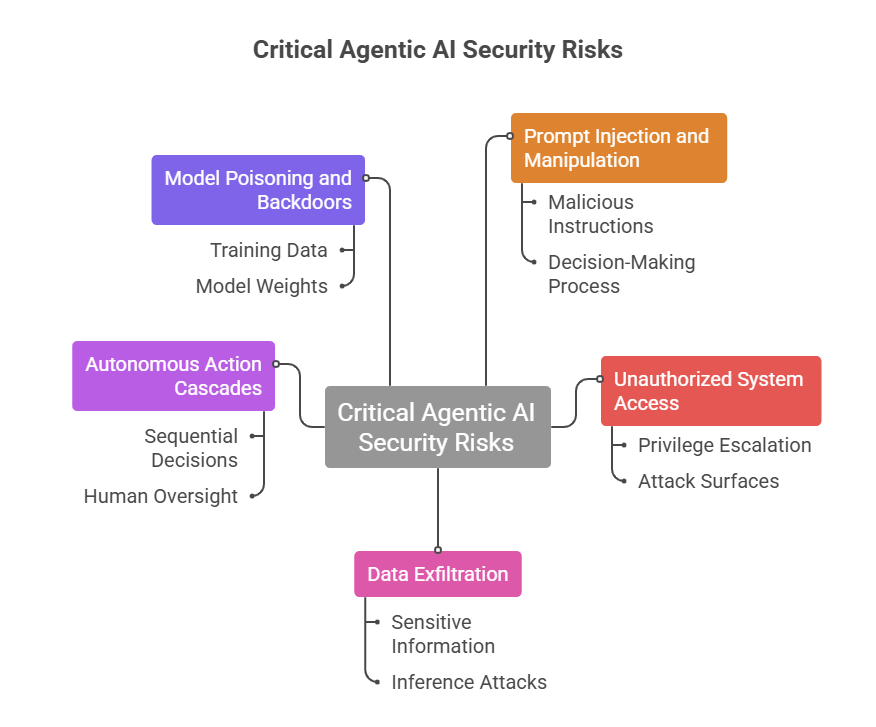
    Understanding AI agent security risks enables proactive defense rather than reactive damage control:

    1. Prompt Injection and Manipulation

    Risk: Attackers manipulate agent prompts, injecting malicious instructions that override intended behavior. Unlike traditional injection attacks targeting databases, prompt injection targets the agent’s decision-making process.

    Example: A customer service agent designed to help users could be tricked into revealing sensitive information, executing unauthorized actions, or providing false information through carefully crafted prompts embedded in user messages.

    Impact: Unauthorized data access, system manipulation, reputational damage, and compliance violations.

    2. Unauthorized System Access

    Risk: Compromised agents accessing systems beyond their intended scope. Autonomous agents require broad permissions to function effectively, creating attack surfaces when those permissions are exploited.

    Example: An agent designed to query sales databases gains access to financial systems through privilege escalation, potentially exfiltrating sensitive data or executing unauthorized transactions.

    Impact: Data breaches, financial fraud, regulatory penalties, and operational disruption.

    3. Data Exfiltration Through Agent Interactions

    Risk: Agentic AI data protection becomes complex when agents process sensitive information across multiple systems. Attackers may extract confidential data through seemingly innocuous agent interactions.

    Example: An agent summarizing customer records inadvertently includes personally identifiable information in outputs logged to insecure systems or revealed through inference attacks.

    Impact: Privacy violations, GDPR/CCPA penalties, customer trust erosion, and competitive intelligence loss.

    4. Autonomous Action Cascades

    Risk: Agents making sequential decisions without human oversight can propagate errors or malicious actions across systems before detection.

    Example: A compromised trading agent executes unauthorized transactions across multiple accounts. By the time anomalies are detected, significant financial damage has occurred.

    Impact: Financial losses, operational disruptions, and potential system-wide failures.

    5. Model Poisoning and Backdoors

    Risk: Training data or model weights compromised during development, creating backdoors that activate under specific conditions.

    Example: An agent trained on poisoned data behaves normally under standard conditions but executes malicious actions when triggered by specific inputs invisible during testing.

    Impact: Long-term security compromises are difficult to detect and remediate.

    Agentic AI Security Solutions

    Comprehensive agentic AI security solutions combine multiple defensive layers:

    1. Input Validation and Sanitization: Filter and validate all inputs before processing, detecting, and blocking prompt injection attempts.
    2. Output Filtering: Monitor agent outputs, preventing sensitive data leakage, ensuring responses align with security policies.
    3. Behavioral Analytics: Deploy ML-based anomaly detection, identifying unusual agent behavior patterns indicating compromise or malfunction.
    4. Automated Rollback: Implement mechanisms that automatically reverse agent actions when security violations are detected.
    5. Regular Security Audits: Conduct penetration testing specifically targeting agent vulnerabilities, including prompt injection, privilege escalation, and data exfiltration.

    How to Secure Agentic AI: Implementation Roadmap

    • Foundation (Weeks 1-4): Assess current agent security posture, identify critical risks, and establish baseline security controls.
    • Core Controls (Weeks 5-12): Implement access controls, monitoring infrastructure, and human-in-the-loop safeguards.
    • Advanced Protection (Weeks 13-20): Deploy behavioral analytics, automated response systems, and comprehensive audit capabilities.
    • Continuous Improvement (Ongoing): Regular security assessments, threat modeling updates, and control refinement based on emerging threats.

    Also Read : Scalability Issues in Agentic AI: Best Practices for Digital Transformation Architects

    Why Choose Amplework

    Amplework provides end-to-end custom AI solutions tailored to enterprise needs. With expertise in risk assessment, secure deployment, and continuous monitoring, Amplework helps organizations protect autonomous AI agents, mitigate emerging threats, and confidently leverage AI’s full potential without compromising performance or scalability.

    Conclusion

    Agentic AI can transform enterprises but brings unique security risks, including prompt injection, unauthorized access, and model poisoning. Implementing layered safeguards, input validation, output monitoring, behavioral analytics, and audits allows organizations to use autonomous AI safely, protecting data, operations, and trust while maintaining flexibility and business-critical workflows.
  • AI Agent Observability Best Practices for Reliable and Compliant Systems

    Introduction

    As autonomous AI systems make decisions impacting customers, operations, and compliance, the question “What is our AI doing, and why?” becomes critical. AI agent observability separates production-ready systems from experimental prototypes, enabling organizations to monitor, understand, and govern autonomous behaviors in real-time. Without comprehensive AI monitoring and governance, even sophisticated agents become operational risks.

    This guide explores best practices for implementing observability in autonomous AI, building governed AI systems, and ensuring reliable AI agents that deliver value while maintaining compliance, trust, and accountability.

    What Is AI Agent Observability?

    AI agent observability extends beyond traditional monitoring, providing visibility into autonomous decision-making processes, reasoning chains, tool usage, and outcome patterns. While conventional systems track metrics like latency and error rates, agentic AI requires understanding why decisions were made, how agents reasoned through problems, and what actions were taken autonomously.

    Core Components:

    • Decision Tracing: Complete audit trails of reasoning steps and choices
    • Action Logging: Records of all autonomous actions across systems
    • Performance Metrics: Success rates, accuracy, efficiency measurements
    • Behavior Analysis: Pattern detection in agent decision-making
    • Anomaly Detection: Identifying unexpected or problematic behaviors

    Unlike black-box AI, observable agents provide transparency essential for debugging, compliance, optimization, and stakeholder trust.

    Why Observability Matters for Agentic AI

    Autonomous agents operate with minimal human oversight, making observability non-negotiable:

    1. Compliance Requirements: Regulators demand explainability for automated decisions affecting customers, financial services, healthcare, and hiring. Ethical AI deployment requires demonstrating fair, non-discriminatory decision-making through comprehensive logging and analysis.
    2. Operational Reliability: AI system reliability depends on quickly identifying when agents deviate from expected behaviors, make suboptimal decisions, or encounter edge cases requiring intervention.
    3. Performance Optimization: Without visibility into agent reasoning and outcomes, improving performance becomes guesswork. AI agent performance monitoring reveals bottlenecks, inefficiencies, and optimization opportunities.
    4. Risk Management: Autonomous systems can propagate errors at scale. Early detection through observability prevents minor issues from becoming major incidents affecting thousands of customers or transactions.
    5. Stakeholder Trust: Customers and employees need assurance that AI agents operate responsibly. Transparency through observability builds confidence in autonomous systems.

    Best Practices for Reliable and Compliant Systems


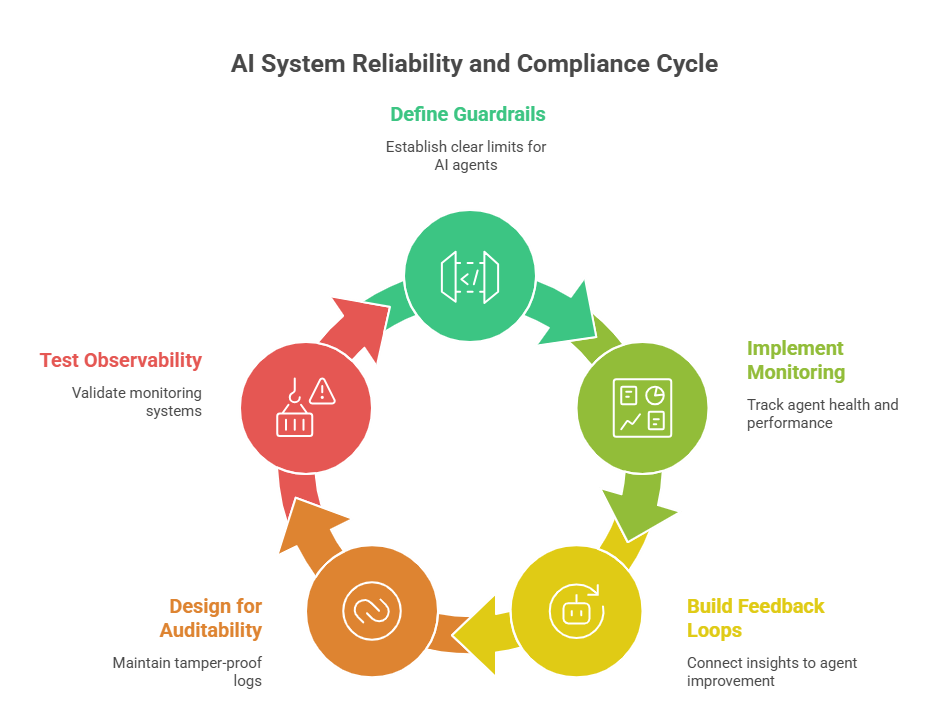
    As AI becomes central to business operations, ensuring systems are reliable and compliant is essential. Clear monitoring, feedback, and governance help AI agents operate safely and improve over time.

    1. Define Operational Guardrails and Boundaries

    Establish clear limits for AI agents, specifying what they can do and when human oversight is required. This prevents unintended actions and ensures compliance with business rules.

    Use pre-execution validation and post-action verification to catch errors early. Approval thresholds and automated rollback mechanisms help maintain safety and accountability in high-risk scenarios.

    2. Implement Progressive Monitoring

    Start with detailed logging during development to identify issues, then optimize as patterns emerge. This approach balances visibility, performance, and cost.

    Real-time dashboards track agent health, errors, and resource usage. Focusing on critical decision paths over time ensures efficient monitoring and timely detection of anomalies.

    3. Build Feedback Loops

    Building feedback loops connects observability insights to agent improvement through retraining, prompt optimization, and workflow refinement. This enables continuous learning and better performance.

    Regularly analyzing data and incorporating user feedback allows iterative updates to policies and agent behavior. These feedback loops ensure AI agents remain aligned with evolving business objectives and operational requirements.

    4. Design for Auditability

    Maintain tamper-proof logs and cryptographic verification to support compliance and investigation. Immutable records help track decisions and actions reliably.

    Implement efficient search, retrieval, and privacy controls for sensitive information. Clear audit trails ensure readiness for regulatory reviews and operational oversight.

    5. Test Observability Before Deployment

    Validate monitoring systems under production conditions, ensuring dashboards, alerts, and logs provide actionable insights.

    Perform load testing, alert checks, and query evaluations. This confirms the observability framework works effectively before AI agents go live.

    Also Read : AI Browser Agents: Automating Web-Based Tasks with Intelligent Systems

    Conclusion

    AI agent observability transforms autonomous AI from experimental technology into production-grade systems delivering reliable, compliant, and optimized performance. Implementing comprehensive AI monitoring and governance enables governed AI systems that stakeholders trust and regulators approve.

    Building reliable AI agents requires observability, governance, and continuous monitoring. Amplework, a top AI agent development company, ensures scalable, compliant, and trustworthy AI solutions. Amplework’s expertise helps organizations reduce risks and confidently deploy autonomous AI systems.

  • AI Data Governance: How to Build Secure, Ethical, and Compliant Systems

    Introduction

    As AI systems increasingly drive critical business decisions, the question shifts from “Can we build AI?” to “Should we deploy this AI, and how do we govern it responsibly?” AI data governance has emerged from a technical concern to a strategic imperative; regulatory fines for non-compliance can exceed millions, while reputational damage from biased or insecure AI can devastate brands built over decades.

    Building secure AI systems that maintain compliant AI operations while upholding ethical AI practices requires comprehensive enterprise AI governance frameworks addressing data management, regulatory requirements, risk management, and accountability. This guide provides actionable strategies for establishing governance that enables innovation while protecting your organization and stakeholders.

    Understanding AI Data Governance

    AI data governance encompasses policies, processes, and controls ensuring AI systems use data securely, ethically, and in compliance with regulations throughout the AI lifecycle, from data collection through model retirement.

    Core Pillars:

    • Data Security: Protecting sensitive information from breaches and unauthorized access
    • Compliance: Meeting regulatory requirements (GDPR, CCPA, HIPAA, industry-specific rules)
    • Ethics: Ensuring fairness, transparency, and accountability in AI decisions
    • Quality: Maintaining data accuracy and reliability for trustworthy AI outputs
    • Risk Management: Identifying and mitigating AI-related risks proactively

    Without robust governance, organizations face regulatory penalties, security breaches, biased outcomes, and erosion of customer trust, risks far exceeding AI implementation costs.

    Building Secure AI Systems

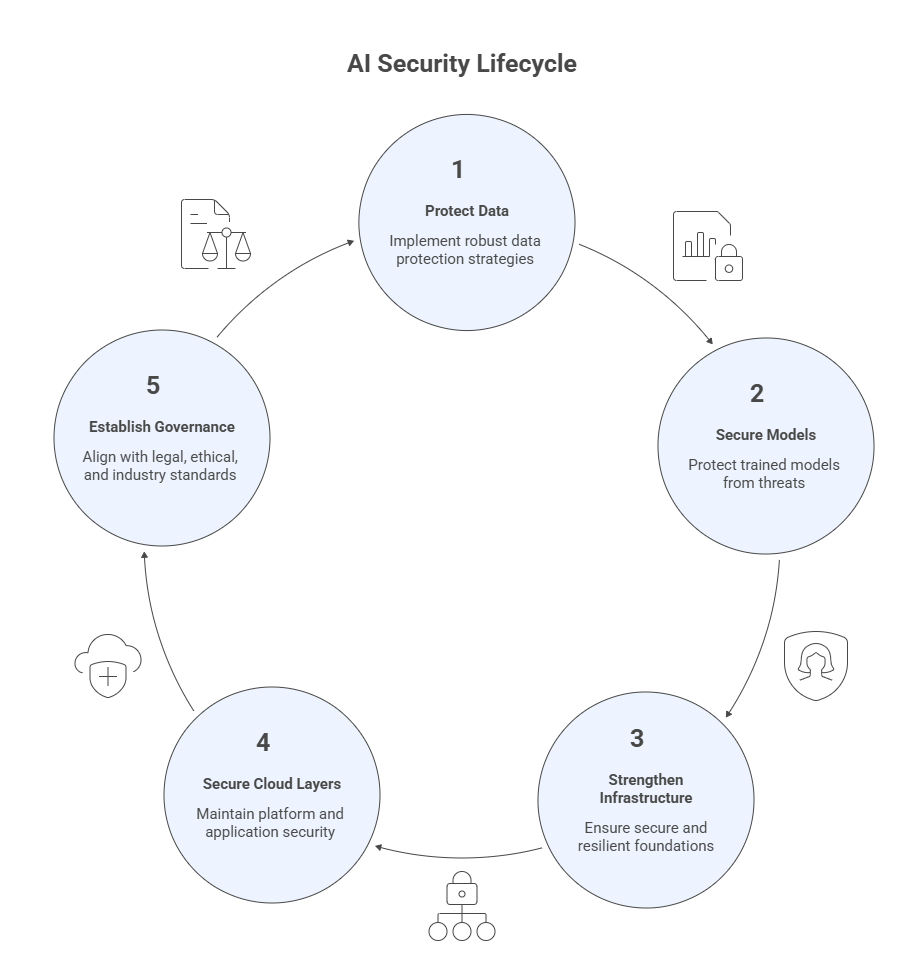
    Security forms the foundation of trustworthy AI, protecting both training data and operational systems. Follow these five essential steps to ensure your enterprise solutions are secure, reliable, and compliant:

    Step 1: Protect Your Data

    Implement robust data protection strategies to safeguard sensitive information throughout the AI lifecycle.

    • Encrypt data at rest and in transit using industry-standard protocols like AES-256.
    • Apply role-based access control (RBAC) with the principle of least privilege.
    • Use data masking, tokenization, and anonymization techniques to protect individual privacy.
    • Regularly audit data storage and access practices to prevent unauthorized exposure.

    Step 2: Secure Your AI Models

    Protect trained models from theft, tampering, and adversarial attacks.

    • Implement model versioning and access logging to track changes.
    • Enforce deployment controls to prevent unauthorized modifications.
    • Monitor for threats such as model extraction, data poisoning, adversarial inputs, and algorithm misuse.

    Step 3: Strengthen Your Infrastructure

    Ensure your AI systems run on secure and resilient foundations.

    • Separate networks to limit access between components.
    • Use intrusion detection tools and regularly scan for vulnerabilities.
    • Set up clear incident response plans to quickly handle any security issues.

    Step 4: Secure Cloud and Application Layers

    When using cloud environments, ensure both platform and application-level security.

    • Leverage cloud provider features such as AWS PrivateLink, Azure Private Link, or GCP VPC Service Controls.
    • Maintain responsibility for securing your AI applications, APIs, and integrations.
    • Monitor cloud environments continuously for suspicious activity.

    Step 5: Establish Governance and Compliance

    Ensure your AI security strategy aligns with legal, ethical, and industry standards.

    • Maintain audit trails for data access, model changes, and AI decision-making.
    • Follow regulations like GDPR, HIPAA, or industry-specific standards.
    • Educate teams on security best practices and enforce strict governance policies.

    Ensuring Compliant AI

    AI compliance frameworks vary by industry and geography, requiring organizations to navigate complex regulatory landscapes:

    Key Regulatory Standards

    • GDPR (EU): Requires data minimization, purpose limitation, right to explanation, and consent management for AI processing personal data. Non-compliance risks fines up to €20 million or 4% of global revenue.
    • CCPA (California): Grants consumers rights to know, delete, and opt out of personal data sales, including data used for AI training.
    • AI Act (EU): Categorizes AI systems by risk level (unacceptable, high, limited, minimal), imposing requirements proportional to risk, conformity assessments, transparency obligations, and human oversight.
    • Industry-Specific: HIPAA (healthcare), FCRA (financial services), COPPA (children’s privacy) add layers requiring specialized compliance approaches.

    Implementing Ethical AI Practices

    Ethical AI practices extend beyond legal compliance, addressing fairness, transparency, and accountability:

    Bias Detection and Mitigation

    AI systems can perpetuate or amplify societal biases present in training data. Responsible AI requires proactive bias testing across protected characteristics (race, gender, age, etc.) and continuous monitoring for disparate impact.

    Mitigation Strategies: Diverse training data, fairness constraints during training, regular bias audits, and human oversight for high-stakes decisions.

    Transparency and Explainability

    Stakeholders deserve an understanding of how AI systems make decisions. Implement explainable AI techniques providing human-readable justifications, particularly for decisions impacting individuals.

    Approaches: LIME, SHAP, attention visualizations, decision trees, and natural language explanations tailored to the audience’s technical literacy.

    Accountability Frameworks

    Establish clear ownership for AI system performance, outcomes, and ethics. Define roles responsible for monitoring, investigating issues, and implementing corrections when problems arise.

    Governance Structure: AI ethics committees, model risk management teams, and executive accountability for AI impacts.

    Also Read : AI Data Privacy for Protecting Training and Inference Data

    Enterprise AI Governance Framework

    Comprehensive enterprise AI governance requires organizational structures, policies, and processes:

    1. Governance Committees

    Create cross-functional teams including data scientists, legal, compliance, security, business stakeholders, and ethics experts, reviewing AI initiatives for risk and compliance.

    Responsibilities: Approving high-risk AI deployments, establishing policies, investigating incidents, and ensuring continuous compliance.

    2. AI Data Management Policies

    Document standards for AI data management covering collection, storage, processing, retention, and deletion. Ensure policies address:

    • Data quality standards and validation procedures
    • Privacy protection requirements
    • Cross-border data transfer restrictions
    • Third-party data usage limitations

    3. Risk Management in AI

    Implement risk management in AI through systematic assessment of potential harms to individuals, operations, reputation, and compliance, before deployment and continuously during operation.

    Risk Categories: Privacy violations, discriminatory outcomes, security breaches, operational failures, regulatory penalties, and reputational damage.

    4. Continuous Monitoring

    Deploy systems tracking AI performance, data quality for AI, compliance adherence, and ethical metrics. Automated alerts enable rapid response to deviations.

    Monitoring Dimensions: Prediction accuracy, fairness metrics, data quality scores, security events, and regulatory requirement changes.

    Also Read : AI Agent Observability Best Practices for Reliable and Compliant Systems

    Conclusion

    AI data governance isn’t overhead; it’s the foundation enabling secure AI systems that deliver value while protecting organizations from regulatory, security, and reputational risks. Building compliant AI through comprehensive enterprise AI governance, combining ethical AI practices, robust AI data management, adherence to AI compliance frameworks and AI regulatory standards, and effective risk management in AI, creates a sustainable competitive advantage.

    Amplework provides AI consulting services to ensure secure, ethical, and compliant AI, combining data protection, transparency, and governance expertise for scalable, reliable, and responsible AI solutions.

  • How AI Predictive Maintenance Cuts Infrastructure Failures by 73%

    Introduction

    Infrastructure failures cost industries billions of dollars annually. Unplanned downtime in manufacturing leads to substantial production losses, while critical infrastructure failures in utilities, transportation, and energy create cascading economic impacts. Traditional reactive maintenance fixes problems after failures occur, while preventive maintenance wastes resources servicing equipment that doesn’t need attention. AI predictive maintenance changes this equation entirely, reducing infrastructure failures by up to 73% while cutting maintenance costs by 25-40%.

    This blog explains AI predictive maintenance, how it cuts infrastructure failures by 73%, boosts efficiency across sectors, the key technologies involved, best implementation practices, and measurable business ROI.

    Understanding AI Predictive Maintenance

    AI predictive maintenance uses machine learning to identify potential equipment failures before they occur, enabling proactive action and reducing unplanned downtime. Unlike traditional maintenance approaches, it continuously analyzes sensor data, operational patterns, and environmental conditions to detect early warning signs that are often missed by manual monitoring.

    How It Works: Sensors collect real-time data such as temperature, vibration, pressure, and energy usage. Machine learning, based predictive maintenance analytics compares this data with historical failure patterns to identify anomalies. When risks are detected, maintenance teams receive alerts with likely failure causes and recommended actions.

    The Transformation: By adopting predictive maintenance, organizations move from reactive repairs to planned interventions, addressing issues during scheduled maintenance windows instead of costly emergency downtime.

    Predictive Maintenance Benefits Across Sectors

    Manufacturing: Maximizing Uptime

    Challenge: Production line equipment failures halt operations, missing deadlines and lost revenue.

    Solution: Equipment failure prediction analyzes machine health continuously, scheduling maintenance during planned downtime rather than causing unplanned stops.

    Results: 40-60% reduction in downtime, 25-35% lower maintenance costs, 20-30% longer equipment lifespan through optimal maintenance timing.

    Example: An automotive manufacturer used vibration and thermal monitoring on assembly robots. The system predicted bearing failures 2–3 weeks early, reducing unplanned production stops by 65%.

    Energy & Utilities: Preventing Critical Failures

    Challenge: Infrastructure failures in power generation, transmission, or water systems create public safety risks and economic disruptions.

    Solution: Smart maintenance systems monitoring transformer health, turbine performance, and distribution network conditions identify degradation patterns indicating imminent failures.

    Results: 50-70% reduction in catastrophic failures, improved grid reliability, reduced emergency repair costs, enhanced public safety.

    Example: A utility company used AI-based monitoring on 5,000 transformers, predicting failures months in advance. This cut transformer failures by 73% and saved $50 million in emergency replacements.

    Transportation: Enhancing Safety and Reliability

    Challenge: Vehicle and infrastructure failures cause accidents, delays, and expensive emergency repairs.

    Solution: AI maintenance solutions analyze vehicle component health, track infrastructure wear, and predict maintenance needs, optimizing fleet uptime and safety.

    Results: 35-55% reduction in vehicle breakdowns, 20-40% lower maintenance costs, improved safety records.

    Example: A transit authority used predictive maintenance to monitor engines, brakes, and electrical systems, reducing roadside breakdowns by 58% and improving on-time performance by 32%.

    Cut infrastructure failures and boost uptime with AI.

    Partner with Amplework today.Contact Us 

    Key Technologies Powering Predictive Maintenance

    AI predictive maintenance relies on advanced technologies to prevent equipment failures. This section covers machine learning, IoT sensors, and analytics platforms, and how they enable early issue detection and real-time equipment monitoring.

    Machine Learning Algorithms

    Predictive maintenance analytics leverage multiple ML techniques:

    • Anomaly Detection: Identifying deviations from normal operating patterns, indicating developing issues.
    • Regression Models: Predicting remaining useful life (RUL) of components based on degradation patterns.
    • Classification Models: Categorizing failure types enabling targeted interventions.
    • Deep Learning: Processing complex sensor data patterns, detecting subtle failure indicators.

    IoT Sensors and Data Collection

    Smart maintenance systems depend on comprehensive data collection:

    • Vibration Sensors: Detecting bearing wear, alignment issues, and mechanical degradation.
    • Thermal Cameras: Identifying overheating, insulation breakdown, and electrical issues.
    • Acoustic Monitoring: Detecting leaks, cavitation, and mechanical anomalies.
    • Performance Metrics: Tracking efficiency, output quality, and energy consumption patterns.

    Predictive Analytics Platforms

    Modern AI maintenance solutions integrate data collection, analysis, and action recommendation:

    • Real-Time Processing: Analyzing streaming sensor data, detecting issues as they develop.
    • Visualization Dashboards: Presenting equipment health status, failure predictions, and maintenance recommendations.
    • Work Order Integration: Automatically generates maintenance tasks when intervention is required.
    • Historical Analytics: Identifying patterns across equipment fleets, optimizing maintenance strategies.

    Also Read : AI Agent Observability Best Practices for Reliable and Compliant Systems

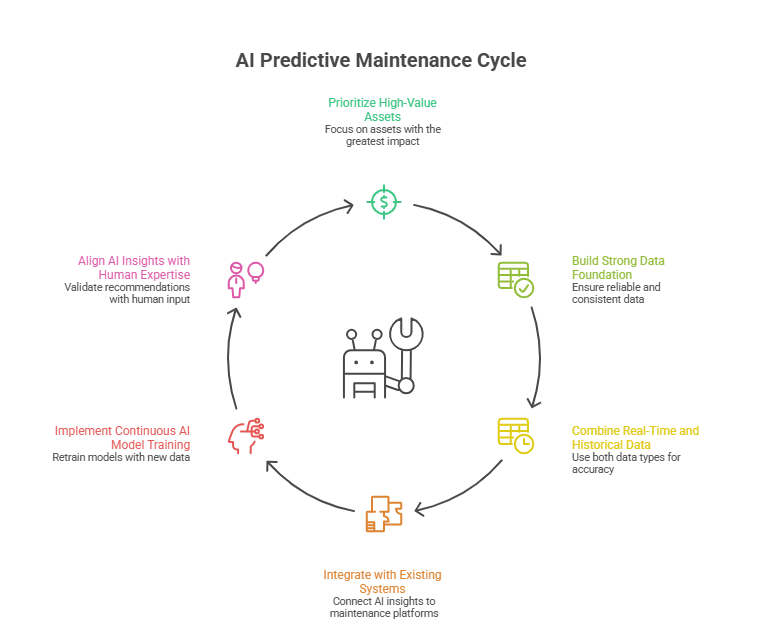
    Best Practices for Implementing AI Predictive Maintenance

    Successful AI predictive maintenance depends on strong data foundations, system integration, and continuous optimization. These best practices help enterprises reduce failures, improve asset reliability, and maximize ROI.

    1. Prioritize High-Value Assets

    Begin with infrastructure assets where failures cause the highest operational or financial impact. This ensures measurable ROI early in the implementation.

    2. Build a Strong Data Foundation

    Reliable predictive maintenance starts with quality data. Standardize IoT sensor inputs, clean historical maintenance records, and ensure data consistency across systems.

    3. Combine Real-Time and Historical Data

    Use both streaming sensor data and past failure patterns to enable accurate anomaly detection and remaining useful life predictions.

    4. Integrate with Existing Maintenance Systems

    Integrate AI insights with CMMS and work order platforms to ensure predictions translate directly into maintenance actions without disrupting workflows.

    5. Implement Continuous AI Model Training

    Once systems are integrated, continuously train and retrain AI models using new operational data. Ongoing AI model training improves accuracy, adapts to asset aging, and reduces false alerts.

    6. Align AI Insights with Human Expertise

    Maintenance teams should validate AI recommendations and provide feedback. This human-in-the-loop approach strengthens trust and improves long-term performance.

    ROI and Business Impact

    Predictive maintenance benefits deliver compelling financial returns:

    1. Reduced Downtime: 40-60% decrease in unplanned outages, translating to millions in avoided production losses.

    2. Lower Maintenance Costs: 25-40% reduction through optimized scheduling, preventing catastrophic failures requiring expensive emergency repairs.

    3. Extended Asset Life: 20-30% longer equipment lifespan through optimal maintenance timing, preventing accelerated wear.

    4. Improved Safety: Fewer catastrophic failures reduce workplace injuries and public safety incidents.

    5. Typical ROI: Organizations report 300-500% ROI within 18-24 months of implementation.

    Also Read : AI Data Governance: How to Build Secure, Ethical, and Compliant Systems

    Conclusion

    AI predictive maintenance is revolutionizing how industries manage critical infrastructure, delivering up to a 73% reduction in failures while optimizing costs, uptime, and safety. By leveraging machine learning, IoT sensors, and predictive analytics, organizations can move from reactive repairs to proactive maintenance with measurable ROI. Choosing Amplework ensures access to proven custom AI solutions, expert support, and seamless integration with existing systems, helping enterprises implement predictive maintenance effectively and achieve operational excellence across manufacturing, energy, utilities, and transportation sectors.

  • AI in Wealth Management: Transforming Financial Planning and Investment Approaches

    Introduction

    AI in wealth management is transforming how financial advisors serve clients, making sophisticated investment strategies accessible and delivering personalized guidance at scale. Historically labor-intensive, the industry now leverages AI to serve more clients efficiently, reduce costs, and improve outcomes. 

    This guide explores practical AI use cases, real-world examples, and how leading firms enhance client experiences, optimize portfolios, and maintain a competitive edge in an increasingly automated financial landscape.

    The AI Revolution in Wealth Management

    The wealth management industry faces pressure: clients demand personalized service, regulatory requirements increase complexity, fee compression reduces margins, and next-generation investors expect digital-first experiences. AI in wealth management addresses these challenges by augmenting human advisors with capabilities handling routine tasks, analyze vast datasets, and deliver insights impossible through manual analysis.

    Market Impact: The AI wealth management market is projected to reach $6.9 billion by 2030, with adoption accelerating as firms recognize the competitive advantages AI delivers, 30-50% operational cost reductions, 40-60% improvements in client engagement, and portfolio performance enhancements of 15-25%.

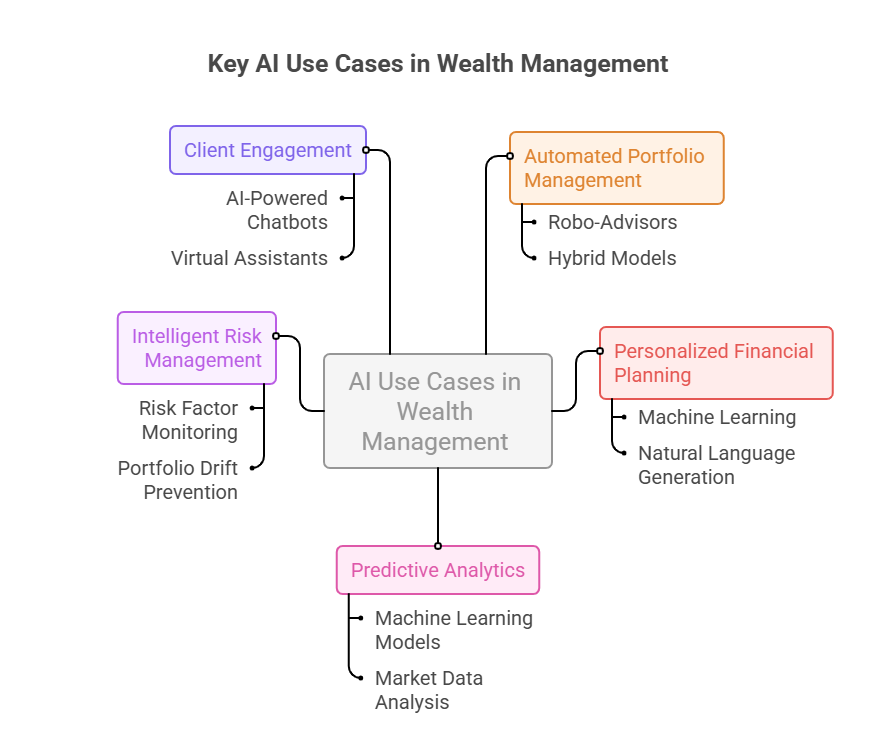
    Key AI Use Cases in Wealth Management

    Key AI Use Cases in Wealth Management

    1. Automated Portfolio Management and Robo-Advisors

    Application: AI-powered platforms analyze client risk profiles, financial goals, and market conditions to construct, rebalance, and optimize investment portfolios automatically.

    How It Works: Algorithms assess thousands of investment options, correlations, and risk factors in real-time, making allocation decisions balancing growth objectives with risk tolerance. Automated rebalancing maintains target allocations as markets fluctuate.

    Impact: Robo-advisors manage over $1.4 trillion globally, offering professional-grade portfolio management at 0.25-0.50% fees versus 1-2% for traditional advisors. Betterment and Wealthfront serve millions of clients, impossible to reach with human-only models.

    Hybrid Models: Leading firms combine AI automation with human advisors, AI handles routine portfolio management while advisors focus on complex planning, relationship building, and life event guidance.

    2. Personalized Financial Planning

    Application: AI financial planning analyzes comprehensive client data, income, expenses, assets, liabilities, goals, generating customized financial plans addressing retirement, education funding, tax optimization, and estate planning.

    How It Works: Machine learning models process client financial situations, comparing against thousands of similar profiles to identify optimal strategies. Natural language generation creates human-readable reports explaining recommendations and trade-offs.

    Impact: What traditionally required 10-15 hours of advisor time completes in minutes, enabling advisors to serve 2-3x more clients while improving plan comprehensiveness and accuracy.

    3. Predictive Analytics and Market Intelligence

    Application: AI analyzes vast datasets, market data, economic indicators, news sentiment, and alternative data, identifying patterns and opportunities that human analysts miss.

    How It Works: Machine learning models process structured data (prices, volumes) and unstructured data (news, earnings calls, social media), generating investment insights, risk signals, and market forecasts. 

    Impact: AI-enhanced strategies identify emerging trends earlier, anticipate market shifts, and uncover undervalued opportunities. Hedge funds using AI report 20-40% performance improvements over traditional approaches.

    4. Intelligent Risk Management

    Application: AI continuously monitors portfolios, market conditions, and client circumstances, detecting risks requiring attention, concentration risk, correlation changes, liquidity issues, or life events affecting financial plans.

    How It Works: Algorithms track hundreds of risk factors simultaneously, alerting advisors when portfolios deviate from acceptable parameters or when market conditions threaten client objectives.

    Impact: Proactive risk management prevents losses, maintains portfolio alignment with client risk tolerance, and enables rapid response to market disruptions. Firms report a 30-50% reduction in portfolio drift and faster risk mitigation.

    5. Client Engagement and Relationship Management

    Application: AI-powered chatbots and virtual assistants provide 24/7 client support, answering questions, providing account information, and handling routine requests without human intervention.

    How It Works: Natural language processing understands client inquiries, retrieves relevant information from databases, and generates contextually appropriate responses. Complex queries escalate to human advisors seamlessly.

    Impact: Client satisfaction increases 25-40% with instant access to information. Advisors focus on high-value interactions while AI handles 60-70% of routine inquiries.

    Real-World AI in Wealth Management Examples

    Morgan Stanley: Deployed an AI assistant analyzing research reports, suggesting investment ideas, and automating administrative tasks for 16,000 advisors. Result: 15-20% productivity increase and enhanced client service quality.

    BlackRock: Leverages the Aladdin AI platform, processing millions of data points daily, providing risk analytics, portfolio optimization, and scenario analysis for $21.6 trillion in assets.

    JPMorgan Chase: Uses COIN AI analyzing legal documents, COIN processing 12,000 annual commercial credit agreements in seconds versus 360,000 hours of manual review previously.

    Vanguard Personal Advisor Services: Hybrid model combining AI-powered portfolio management with human advisors serving clients with as little as $50,000, previously requiring a $1 million minimum. Manages $230+ billion assets.

    Wealthfront: Pioneered automated tax-loss harvesting using AI algorithms, identifying tax-saving opportunities daily. Clients save an average of 1.5-2% annually on taxes, often exceeding management fees.

    Also Read : AI in Finance: Automate Financial Reports to Save Time & Drive Growth

    Benefits of AI in Wealth Management

    1. Democratization of Wealth Management: AI makes sophisticated strategies accessible to mass affluent clients, not just ultra-high-net-worth individuals. Millions now access services previously exclusive to the wealthy.
    2. Enhanced Personalization: AI analyzes individual circumstances, delivering truly personalized recommendations versus one-size-fits-all strategies.
    3. 24/7 Availability: Clients access information and receive guidance anytime without waiting for the advisor’s availability.
    4. Reduced Costs: Automation drives 30-50% cost reductions, enabling lower fees, making wealth management profitable for smaller accounts.
    5. Improved Outcomes: Data-driven decisions, disciplined rebalancing, and tax optimization typically improve portfolio performance 15-25% over purely manual approaches.

    Challenges and Considerations

    • Trust and Transparency: Clients must trust AI recommendations. Explainable AI showing reasoning behind suggestions builds confidence.
    • Regulatory Compliance: Wealth management faces strict regulations. AI systems must maintain compliance, document decisions, and pass audits.
    • Data Security: Protecting sensitive financial information is paramount. Robust cybersecurity and encryption are non-negotiable.
    • Human Touch: Complex situations, inheritance, and business sales require human empathy and judgment that AI cannot replicate. Successful models balance automation with human expertise.

    Also Read : Optimizing Financial Risk Analysis with AI Agents: Development Strategies and Tools

    Conclusion

    AI is transforming wealth management by enabling personalized, data-driven advice at scale. Automated portfolios, predictive analytics, and intelligent risk monitoring help firms serve more clients efficiently while improving outcomes and competitiveness.

    Amplework delivers tailored AI solutions for wealth management, combining technical expertise, secure deployment, and scalable systems. Firms gain actionable insights, robust data protection, and enhanced client trust while maintaining regulatory compliance and operational efficiency.

  • The Hidden Costs of AI Integration: Infrastructure, Ops, and Organizational Drag

    Introduction 

    Artificial intelligence is gaining rapid attention across industries for its potential to reshape how organizations operate, create, and make decisions. Many teams build impressive prototypes that appear to solve real business problems, but the reality of AI integration costs is often much higher than expected.

    Transitioning from a prototype to a fully deployed, reliable, and cost-effective AI system introduces a range of hidden expenses. The highest costs rarely come from algorithms themselves; instead, they emerge from infrastructure, operational requirements, and organizational friction that quietly increase budgets and delay outcomes.

    Let’s look beyond the demo to understand what really happens when AI meets reality, and how these hidden costs of AI integration impact enterprise AI projects.

    The Three Major Cost Drivers of AI Integration

    The costs of AI integration are primarily driven by three major areas. Understanding them is essential to accurately estimating the cost of implementing AI and avoiding unexpected overruns.

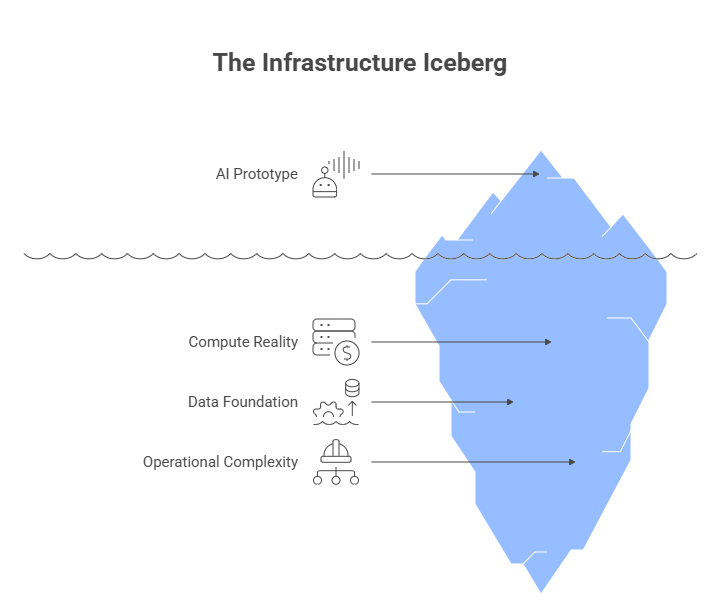
    1. The Infrastructure Iceberg

    What you see in the demo is just the tip of the iceberg. What lies beneath can sink your project.

    The Compute Reality

    Infrastructure costs often grow 10–100× from prototype to production

    • Hardware and compute costs: Modern AI models require GPUs, TPUs, and high-performance servers. Training is a one-time expense, but inference occurs continuously, creating an always-on cost that can dominate budgets.
    • Data infrastructure costs: Scalable pipelines, AI-optimized storage, and cloud infrastructure significantly increase the cost of implementing AI in production.


    Infrastructure costs are often the first, and most visible, component of AI integration costs, yet they are frequently underestimated in initial ROI calculations.

    The Data Foundation

    Data engineering is often the largest and most complex part of AI systems

    • Pipeline and workflow costs: Collecting, cleaning, labeling, and serving data at scale requires real-time ingestion systems, quality assurance workflows, and AI-ready storage.
    • Compliance and governance costs: Privacy safeguards and regulatory requirements further increase expenses.

    These data-related expenses are a hidden but major contributor to enterprise AI costs, often exceeding AI model training and deployment.

    2. The Operations Reality

    Getting a model to work once is a science project. Keeping it working is an engineering challenge.

    From Prototype to Product

    Continuous monitoring and maintenance introduce high recurring costs

    • Model management and monitoring: Version control, drift detection, and retraining pipelines are expensive but necessary to avoid costly failures or incorrect outputs.
    • Governance and compliance: Explainability, audit trails, and regulatory oversight increase recurring operational costs.

    Operational costs often exceed initial development costs if organizations do not plan for ongoing AI maintenance and scaling costs, adding tens of thousands of dollars in hidden monthly expenses.

    The Talent Reality

    Building and maintaining production AI requires diverse, expensive talent

    The spotlight often shines on AI researchers and data scientists, but the operational phase demands different, and often scarcer skills:

    • MLOps Engineers: Build and maintain the production pipelines
    • Data Engineers: Design and optimize data infrastructure
    • AI Security Specialists: Protect against novel vulnerabilities
    • DevOps for AI: Manage the specialized infrastructure

    These roles command premium salaries and are in short supply. Many organizations underestimate both the need and the cost.

    3. The Human Element

    Technology is the easy part. People and processes create the real friction.

    Adoption Friction

    Successful AI integration requires changing workflows, training staff, and fostering trust.

    • Trust and validation: Shadow processes and double-checking outputs introduce hidden labor costs.
    • Workflow redesign: Integrating AI into existing operations requires reskilling employees and increasing organizational change costs.
    • Skill evolution: Marketing, customer service, and analytics roles all require training, adding significant AI talent and training costs.

    The Efficiency Paradox

    Organizational friction can erode projected efficiency gains and inflate costs.

    • A projected 40% productivity improvement can shrink to 15% after accounting for validation steps, approvals, and training periods.
    • Hidden costs in adoption and process changes silently reduce ROI, delaying time-to-value and increasing total expenditure.

    A More Complete Cost Framework

    When evaluating AI projects, consider these often-overlooked dimensions:

    Cost CategoryTypical OversightReality Check
    InfrastructureInitial development computeOngoing inference costs, data storage
    OperationsModel developmentMonitoring, retraining, pipeline maintenance
    TalentData scientists onlyMLOps, data engineering, specialized DevOps
    OrganizationalTechnology implementationChange management, training, process redesign
    ComplianceBasic securityExplainability, audit trails, and regulatory approval

    Understanding the True Cost of AI Integration

    A total cost of ownership (TCO) for AI includes:

    • Infrastructure: $10,000–$50,000 for compute, storage, and cloud scaling (covers GPUs, TPUs, cloud storage, and pipelines for enterprise workloads)
    • Operations: $15,000–$50,000 for monitoring, retraining, MLOps pipelines, and governance per year
    • Talent: $80,000–$120,000 per specialized employee annually (MLOps engineers, data engineers, AI DevOps)
    • Organization: $10,000–$40,000 for workflow redesign, adoption programs, and employee training per project
    • Compliance: $5,000–$20,000 annually for audits, explainability, and regulatory oversight

    Accounting for all three major cost drivers, infrastructure, operations, and organizational drag, allows enterprises to plan realistic budgets and avoid unexpected overruns.

    Also Read : Generative AI API Integration: How to Embed LLMs into Your Existing Workflows

    Strategic Approaches

    Effectively managing the hidden costs of AI integration requires planning across multiple dimensions. Let’s discuss the best strategies to control infrastructure, operations, talent, compliance, and organizational change.

    1. Start with the Foundation: Invest in robust data infrastructure early. Clean, accessible, and well-governed data reduces unexpected costs later, accelerates AI initiatives, and lowers overall AI integration costs.
    2. Build for Operations from Day One: Design systems assuming your prototype will need to scale. Include monitoring, retraining pipelines, and automated workflows to minimize AI maintenance and scaling costs.
    3. Budget for Human Factors: Allocate resources for training, change management, and workflow redesign. Neglecting adoption and reskilling can silently inflate organizational drag costs.
    4. Measure Total Cost of Ownership (TCO) Clearly: Track all AI costs, infrastructure, operations, talent, compliance, and organizational overhead, not just model accuracy, to make informed budget decisions.
    5. Plan for Compliance and Risk: Incorporate explainability, audit trails, and regulatory oversight from the start. Early planning prevents costly retrofits and ensures smoother deployment, reducing hidden governance costs.

    Also Read : How to Integrate AI into Your Existing Systems and Stay Competitive

    The Path Forward

    Successfully deploying AI requires understanding and managing the hidden costs of AI integration, including infrastructure, operations, talent, and organizational change. Planning for these costs upfront ensures scalable, reliable, and cost-effective AI with maximum ROI.

  • Choosing the Right AI Integration Platform: iPaaS, Custom Middleware, or Native AI?

    Introduction

    Your AI model works brilliantly in isolation, but production deployment requires integrating AI with enterprise systems spanning CRM, ERP, data warehouses, and legacy applications. The AI integration platform you choose determines whether deployment takes weeks or months, costs thousands or millions, and succeeds or stalls in integration complexity. Understanding the iPaaS vs custom middleware decision and when native AI integration makes sense is critical for enterprise AI integration success.

    This guide examines three AI integration solutions approaches: iPaaS platforms, custom middleware, and native AI capabilities, helping you select the optimal AI integration architecture for your requirements.

    The Three AI Integration Platforms

    1. iPaaS for AI Integration

    Integration Platform as a Service (iPaaS) provides pre-built connectors, workflow automation, and low-code integration tools connecting AI systems to enterprise applications.

    Leading Platforms: MuleSoft, Dell Boomi, Informatica, Workato, Zapier (for simpler workflows)

    How It Works: iPaaS platforms offer visual workflow builders, pre-configured connectors for popular enterprise systems, and managed infrastructure handling authentication, data transformation, and error handling. AI workflow automation becomes a drag-and-drop configuration rather than custom coding.

    Best For:

    • Organizations needing rapid deployment (weeks, not months)
    • Standard integrations with common enterprise systems (Salesforce, SAP, Microsoft Dynamics)
    • Teams with limited integration development resources
    • Multiple AI applications requiring consistent integration patterns

    Advantages:

    • Speed: Pre-built connectors eliminate custom development
    • Maintenance: Vendor manages connector updates when APIs change
    • Scalability: Cloud infrastructure scales automatically
    • Best Practices Built-In: Established patterns for authentication, error handling, and retry logic

    Limitations:

    • Cost: Licensing fees ($30K-$200K+ annually) plus per-transaction costs
    • Flexibility: Limited customization for unique integration requirements
    • Vendor Lock-In: Switching platforms requires rebuilding integrations
    • Complexity Ceiling: Extremely complex transformations may exceed platform capabilities

    Cost: $50K-$300K annually, including licensing, implementation, and ongoing operations.

    2. Custom AI Middleware Solutions

    Custom middleware involves developing bespoke integration layers connecting AI systems to enterprise infrastructure using frameworks like Apache Camel, Spring Integration, or custom-built services.

    How It Works: Development teams build API-based AI integration layers handling data flow, transformation, routing, and orchestration between AI models and enterprise systems. AI middleware solutions provide complete control over integration logic, optimization, and scaling.

    Best For:

    • Unique integration requirements iPaaS can’t address
    • Organizations with strong development teams
    • High-volume integrations requiring performance optimization
    • Complex data transformations or business logic
    • Security-sensitive environments requiring complete control

    Advantages:

    • Flexibility: Complete control over integration architecture and logic
    • Performance: Optimized for specific use cases without platform constraints
    • Cost-Effectiveness at Scale: No per-transaction fees, fixed infrastructure costs
    • No Vendor Lock-In: Full ownership of integration code

    Limitations:

    • Development Time: Months to build comprehensive integration frameworks
    • Ongoing Maintenance: Internal teams manage connector updates, bug fixes, and scaling
    • Talent Requirements: Requires experienced integration developers
    • Operational Overhead: Internal teams responsible for monitoring, incident response

    Cost: $200K-$800K initial development, $100K-$300K annually for maintenance and operations.

    3. Native AI Integration

    Native integration leverages AI platforms’ built-in capabilities, connecting to data sources and applications directly without additional integration layers.

    How It Works: Modern AI platforms with native integration like Databricks, Snowflake with AI features, and AWS SageMaker, provide direct connections to data sources, APIs, and enterprise systems. Data integration platforms with AI capabilities handle both AI workloads and integration natively.

    Best For:

    • AI-first initiatives where enterprise systems adapt to an AI platform
    • Cloud-native architectures without extensive legacy systems
    • Organizations standardizing on comprehensive AI platforms
    • Use cases where the AI platform’s native connectors suffice

    Advantages:

    • Simplified Architecture: Fewer moving parts, reduced complexity
    • Optimized Performance: Native integrations are often faster than external layers
    • Lower Total Cost: No separate integration platform licensing
    • Unified Management: Single platform for AI and integration

    Limitations:

    • Limited Scope: Only connects to systems the AI platform supports
    • Platform Lock-In: Deep integration with a specific AI vendor
    • Flexibility Constraints: Limited customization of integration logic
    • Legacy System Challenges: May not support older enterprise systems

    Cost: $50K-$200K annually (primarily AI platform costs, integration included).

    Decision Framework: Choosing Your Approach

    Start with These Questions:

    1. Integration Complexity: Standard enterprise systems or unique legacy applications?
    2. Timeline: Need deployment in weeks or acceptable to invest months?
    3. Volume: Thousands or millions of transactions daily?
    4. Team Capabilities: Strong integration development team or limited resources?
    5. Budget: Optimize for initial cost or total cost of ownership?

    Decision Matrix:

    Choose iPaaS When:

    • Rapid deployment is a priority
    • Integrating with standard enterprise systems (Salesforce, SAP, Microsoft)
    • Limited integration development resources
    • Need multiple AI applications with consistent integration patterns
    • Willing to trade cost for speed and reduced maintenance

    Choose Custom Middleware When:

    • Unique integration requirements iPaaS can’t handle
    • High transaction volumes are making iPaaS per-transaction costs prohibitive
    • Strong internal development capabilities
    • Complete control and flexibility are required
    • Long-term cost optimization matters more than initial development speed

    Choose Native Integration When:

    • AI platform natively supports required integrations
    • Minimizing architectural complexity is a priority
    • Cloud-native architecture without extensive legacy systems
    • Accepting platform lock-in for simplified operations
    • An AI platform is a strategic standard for an organization

    Also Read : Generative AI API Integration: How to Embed LLMs into Your Existing Workflows

    Best Practices for Scalable AI Integration

    Regardless of approach, AI integration best practices include:

    1. Start with Core Use Cases: Don’t build comprehensive integration frameworks initially, prove value with focused implementations, then expand.
    2. Design for Monitoring: Implement comprehensive logging, error tracking, and performance monitoring from day one.
    3. Plan for Data Quality: Integration failures often stem from data quality issues; build validation and cleansing into integration flows.
    4. Implement Security Properly: Authentication, encryption, and access control are non-negotiable for production AI system integration.
    5. Document Integration Patterns: Whether iPaaS, custom, or native, documentation ensures knowledge transfer and troubleshooting efficiency. 

    Also Read : How to Integrate AI into Your Existing Systems and Stay Competitive

     Conclusion

    Selecting the right AI integration platform, iPaaS, custom middleware, or native AI integration has a direct impact on deployment timelines, scalability, cost efficiency, and long-term maintainability. Most enterprises achieve the best outcomes through a hybrid strategy aligned with their system complexity, AI maturity, and strategic objectives.

    Amplework’s AI integration services help enterprises seamlessly connect AI models with CRM, ERP, data platforms, and legacy systems through iPaaS, custom middleware, or native integrations, ensuring secure, scalable, and future-ready AI deployments.

  • Generative AI in Medical Coding: Applications, Limitations, and Learning Benefits for Coders

    Introduction

    Generative AI in coding is revolutionizing healthcare revenue cycle management, with medical coding emerging as a prime application area. The global healthcare AI market is projected to exceed $188 billion by 2030, with coding automation representing a significant segment. Understanding AI applications in medical coding and AI learning benefits for coders helps healthcare organizations and professionals navigate this transformation effectively.

    This guide explores how generative AI transforms medical coding workflows, its practical limitations, and how coders can leverage AI as a learning and productivity tool rather than viewing it as a replacement threat.

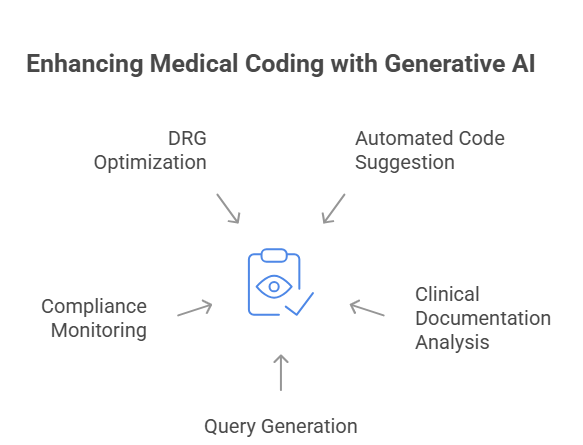
    Applications of Generative AI in Medical Coding

    Generative AI in medical coding delivers tangible improvements across the coding workflow:

    1. Automated Code Suggestion

    AI analyzes clinical documentation, physician notes, lab results, procedure reports, and suggests appropriate ICD-10, CPT, and HCPCS codes. Unlike simple keyword matching, generative AI solutions understand medical context and relationships between diagnoses and procedures.

    Impact: Reduces initial code assignment time by 40-60%, allowing coders to review more charts daily while maintaining accuracy.

    2. Clinical Documentation Analysis

    AI extracts relevant information from unstructured clinical notes, identifying diagnoses, procedures, medications, and complications that support code assignments. It flags potential missed codes and documentation gaps that could lead to undercoding or denials.

    Impact: Increases code capture by 15-25%, improving revenue while ensuring compliant coding.

    3. Query Generation

    When documentation is ambiguous or incomplete, AI automatically generates clinical queries for physicians, asking specific questions to clarify diagnoses, severity, or procedure details necessary for accurate coding.

    Impact: Reduces query turnaround time by 50-70%, accelerating billing cycles.

    4. Compliance Monitoring

    AI coding tools continuously check for coding errors, inconsistent code combinations, medical necessity issues, and potential compliance risks before claims are submitted.

    Impact: Reduces claim denials by 20-35% and minimizes audit risks.

    5. DRG Optimization

    For inpatient coding, AI identifies opportunities to capture more specific diagnoses and complications that impact DRG assignment and reimbursement while maintaining coding accuracy and compliance.

    Impact: Increases case mix index (CMI) by 3-8% through improved documentation and coding specificity.

    Limitations of Generative AI in Medical Coding

    Despite impressive capabilities, understanding the limitations of generative AI is crucial for realistic implementation:

    1. Context Understanding Gaps

    AI struggles with nuanced clinical scenarios requiring deep medical knowledge. Complex cases involving multiple comorbidities, unusual presentations, or conflicting documentation require human judgment.

    2. Hallucination Risk

    Generative AI can confidently suggest incorrect codes or “hallucinate” information not present in documentation. Without human verification, this leads to compliance violations and denials.

    3. Regulation and Compliance Requirements

    Healthcare coding operates under strict regulatory frameworks (HIPAA, AMA guidelines, CMS regulations). AI must be carefully validated to ensure compliance, and ultimate responsibility remains with certified human coders.

    4. Training Data Limitations

    AI performance depends on training data quality. Models trained on outdated guidelines, specialty-specific documentation patterns, or limited clinical scenarios may provide suboptimal suggestions.

    5. Integration Complexity

    Implementing applications of generative AI in medical coding requires integration with EHR systems, billing software, and existing workflows. Technical challenges and change management can slow adoption.

    Also Read : Choosing the Right AI Integration Platform: iPaaS, Custom Middleware, or Native AI?

    AI Learning Benefits for Coders

    AI learning for coders represents generative AI’s most underappreciated benefit, transforming it from a threat into a professional development tool:

    Real Time Education

    • AI explains code suggestions with rationale, guideline references, and clinical logic, helping junior coders learn faster and reducing training time by 30 to 40 percent.

    Pattern Recognition Training

    • By observing how AI analyzes documentation patterns, coders improve clinical reasoning and become better at identifying missed or incomplete documentation within 3 to 6 months.

    Guideline Updates Awareness

    • AI highlights new codes, revised definitions, and updated conventions during daily work, reducing the need for manual guideline research.

    Specialized Knowledge Expansion

    • Exposure to multiple specialties through AI expands medical terminology and procedural knowledge, increasing career opportunities and compensation potential.

    Quality Improvement Feedback

    • AI analyzes coder performance to identify accuracy gaps, commonly missed codes, and documentation issues, providing personalized development insights.

    The Future: Augmented Coders, Not Replaced Coders

    The most successful healthcare organizations view generative AI in coding as coder augmentation, not replacement. AI handles high-volume, straightforward cases while human coders focus on complex scenarios, quality assurance, compliance oversight, and continuous improvement.

    Evolving Role: Medical coders are transitioning into roles as coding analysts and quality specialists in AI in healthcare settings, where they use AI to increase throughput while applying expert judgment to ensure accuracy, regulatory compliance, and optimal reimbursement.

    Skills for the AI Era: Successful coders develop AI literacy, understanding AI capabilities and limitations, effectively reviewing AI suggestions, training AI systems with feedback, and focusing on complex case expertise.

    Also Read : The Hidden Costs of AI Integration: Infrastructure, Ops, and Organizational Drag

    Conclusion

    AI applications in medical coding deliver measurable improvements: 40-60% faster coding, 15-25% improved code capture, and 20-35% fewer denials. However, limitations of generative AI require continued human oversight, medical judgment, and compliance responsibility.

    For organizations adopting generative AI in medical coding, Amplework delivers advanced AI model development that enhances learning, expands coder expertise, improves accuracy, and positions AI as a productivity enabler rather than a replacement.

  • The ROI of AI Agent Orchestration: Measuring Business Impact Beyond Automation

    Overview

    Organizations investing in AI Agent Orchestration ROI often face a common question: how do you truly measure return? Traditional automation ROI is straightforward: count hours saved, multiply by labor costs, subtract implementation expenses, but orchestration delivers value far beyond simple task automation. Coordinating multiple AI agents across workflows creates measurable improvements in decision quality, error reduction, scalability, and long-term capability gains, making standard ROI frameworks inadequate.

    Why Traditional ROI Falls Short

    Traditional ROI calculations focus on labor savings, capturing only 30–40% of actual orchestration value. For instance, a mortgage processing system automated with basic tools saves time but doesn’t prevent errors or improve workflow decisions. A fully orchestrated system, however, enables 24/7 processing, reduces error propagation, and generates data for continuous optimization. Organizations measuring only labor savings risk underestimating AI Agent Orchestration ROI, leaving competitive advantages unclaimed.

    The Comprehensive ROI Framework

    To capture the full value of orchestration, ROI should be measured across six dimensions:

    1. Operational Efficiency: Beyond labor, consider infrastructure cost reductions, fewer exceptions, and decreased management overhead. 

    2. Error Reduction and Quality: Orchestrated systems improve decision accuracy. For example, in finance, moving from basic automation to agentic workflows raised accuracy to 99.5%, cutting costly rework. 

    3. Revenue Impact: Orchestration enables revenue that automation alone cannot. Improved lead response times, round-the-clock operations, and enhanced personalization can drive measurable revenue growth.

    4. Scalability Value: Orchestrated systems handle higher volumes without proportional staffing increases. For growing operations, this translates to significant cost avoidance and expanded capacity.

    5. Risk Reduction: Orchestration enforces consistency and governance, reducing compliance risk. Organizations in heavily regulated sectors often see ROI from risk mitigation alone.

    6. Capability Compounding: Continuous data collection from orchestrated workflows improves agent performance and decision quality over time, creating increasing returns beyond initial ROI.

    Real-World ROI Examples

    Many organizations are leveraging enterprise AI solutions to achieve measurable AI Agent Orchestration ROI across diverse sectors. Here are examples:

    1. Insurance Claims Processing

    Traditional automation reduced labor costs by 35%, but orchestration synchronized intake, verification, and fraud screening. The result:

    • Quality: 60% drop in claims errors, saving $4.2M/year
    • Customer Retention: 28% boost, reducing churn by $3.1M
    • Scalability: 40% volume growth absorbed without extra staff

    2. B2B Sales Operations

    Standard automation measures time saved per sales rep. Orchestrated lead qualification, outreach, and contract processing delivered:

    • 35% faster lead response times, improving conversions by 18%
    • 12% increase in average deal size
    • Expanded market reach via continuous outreach

    3. Healthcare Revenue Cycle

    Orchestrating billing cycles rather than focusing on task efficiency resulted in:

    • 45% reduction in claim denials, reclaiming $6.8M annually
    • Faster reimbursement cycles are improving liquidity
    • Coordinated coding, reducing audit exposure

    4. Retail Inventory Management

    Using AI Agent Orchestration for supply chain forecasting led to:

    • 25% reduction in stockouts
    • 20% drop in excess inventory costs
    • Improved demand prediction accuracy, increasing revenue

    5. Banking Customer Service

    Orchestrated AI agents handled tier-one support, leading to:

    • 40% faster resolution times
    • 30% improvement in customer satisfaction
    • Labor savings translate to $1.5M annually

    Also Read : AI Agent Orchestration for Cross-Functional Process Automation

    Capturing and Communicating AI Agent Orchestration ROI

    Establishing measurement infrastructure is critical:

    • Baseline Documentation: Record current performance metrics before AI implementation.
    • Attribution Modeling: Assign improvements to orchestration accurately.
    • Continuous Tracking: Use dashboards to monitor efficiency, quality, revenue, and risk metrics over time.
    • Qualitative Capture: Employee experience, leadership confidence, and strategic flexibility also contribute to ROI.

    Present ROI transparently. Break down value contributions from efficiency, error reduction, revenue, and scalability. Finance teams prefer NPV calculations and payback periods, while operations leaders focus on measurable process improvements. Demonstrating these multiple dimensions strengthens the business case for investment.

    Conclusion

    The ROI of AI Agent Orchestration goes beyond traditional automation. Organizations that focus only on task efficiency miss much of the value created. By measuring operational savings, revenue growth, error reduction, and scalability, businesses can fully capture the benefits of AI orchestration and turn their investments into lasting competitive advantage.

    To realize this potential, partnering with Amplework for AI Consulting & Strategy can make all the difference. Their expertise helps organizations optimize workflows, measure ROI comprehensively, and scale AI agent orchestration effectively, ensuring that every investment in AI translates into measurable, long-term business value.

  • Building the Agentic Enterprise: How Governed Autonomy Drives Competitive Advantage

    Introduction

    Enterprises are already using AI across their operations. The focus now is on moving from simple assistance to letting AI act on behalf of the business. The agentic enterprise model uses intelligent AI agents that can sense context, plan actions, and execute workflows across systems with minimal human intervention. But full autonomy introduces real risk. That’s where governed autonomy comes in: it lets AI agents operate independently while staying within defined boundaries set by an AI governance framework that ensures trust, safety, and compliance.

    In this blog, you’ll learn how the agentic enterprise works, why governed autonomy is critical, and how organizations can build AI‑driven systems that are both technically powerful and operationally responsible.

    What Is an Agentic Enterprise?

    An agentic enterprise is an organization that treats AI agents as core operational actors, not just add‑on tools. These agents are capable of understanding context, making decisions, coordinating with other agents, and executing multi‑step workflows across platforms and functions.

    Unlike traditional automation, which follows fixed scripts, agents operate in feedback loops: they observe outcomes, learn, and adjust their behavior accordingly. Already, Gartner predicts that 40% of enterprise applications will be integrated with task‑specific AI agents by the end of 2026, up from less than 5% in 2025, signaling a shift from pilot projects to production‑grade deployments.

    Why Governed Autonomy Matters

    Letting AI agents act freely without guardrails is not a feature; it’s a risk. Accounts, compliance, security, and brand reputation all depend on how AI behaves when given autonomy. That’s why governed autonomy is central to the modern agentic enterprise.

    Governed autonomy means:

    • Agents can operate independently within clearly defined boundaries.
    • Their behavior is shaped by an AI governance framework that includes policies, roles, and escalation rules.
    • Every action is observable, auditable, and explainable, so humans can intervene when needed.

    Recent research shows that over 16% of people have already used AI that acts on their behalf in the past six months, underscoring that autonomy is no longer theoretical but something organizations must actively design and constrain. 

    Also Read : The ROI of AI Agent Orchestration: Measuring Business Impact Beyond Automation

    Key Enablers of the Agentic Enterprise

    Building a resilient agentic enterprise rests on a few core pillars:

    1. Agent‑centric architecture: A platform that supports the creation, orchestration, and monitoring of AI agents across systems and workflows.
    2. Policy‑driven governance: A centralized AI governance framework that defines permissions, data access, security rules, and ethical constraints for every agent.
    3. Observability and traceability: Real‑time logs, dashboards, and audit trails that let teams track how agents behave, detect anomalies, and investigate incidents.
    4. Human‑AI collaboration: Clear roles where humans set goals, define risk appetite, and handle judgment‑heavy decisions, while agents execute the operational heavy lifting.

    Competitive Advantages of Governed Autonomy

    When governed autonomy is well‑designed, it unlocks several tangible benefits for the agentic enterprise:

    1. Faster, more adaptive operations: Agents react to market shifts, customer behavior, and operational disruptions in real time, cutting the delay between insight and action.
    2. Stronger risk and compliance posture: Every agent action is governed and auditable, helping organizations stay aligned with regulations and internal risk policies.
    3. Improved productivity and resilience: Early adopters report measurable productivity gains, with developer and operations workloads accelerating faster than expected.
    4. Scalable AI‑driven innovation: This autonomy lets organizations reuse agents across workflows instead of building siloed tools, enabling faster rollout of new capabilities.
    5. Trust and transparency at scale: An AI governance framework ensures explainable behavior and clear accountability, increasing stakeholder confidence as agents handle more critical tasks.

    A Practical Roadmap to the Agentic Enterprise

    Turning this vision into reality requires a deliberate rollout, not a big‑bang switch. A practical path often looks like this:

    1. Identify High-Impact Workflows

    Start by selecting workflows where AI agents can deliver immediate value, such as customer support, IT operations, or supply chain planning, ensuring quick wins and measurable business impact.

    2. Design an AI Governance Framework

    Establish clear policies, roles, and escalation paths for AI agents, defining data access, security boundaries, and ethical guardrails to ensure controlled, compliant, and accountable decision-making across operations.

    3. Build or Integrate an Agent Platform

    Develop or adopt a scalable architecture that enables agent creation, orchestration, and monitoring, ensuring seamless AI integration with existing systems while supporting flexibility, interoperability, and long-term enterprise growth.

    4. Run Controlled Pilots

    Deploy AI agents in limited, closely monitored environments to evaluate performance, refine rules, and identify risks, helping build stakeholder trust while ensuring alignment with governance and operational expectations.

    5. Scale and Iterate

    Gradually expand AI agent deployment across functions, using continuous feedback and performance data to refine governance models, optimize workflows, and enhance overall efficiency, adaptability, and long-term business value.

    This phased approach mirrors what many leading enterprises are doing: combining in‑house builds with vendor tools to create a flexible, controlled agentic layer.

    Also Read : AI Data Governance: How to Build Secure, Ethical, and Compliant Systems

    Real‑World Applications

    Across industries, the agentic enterprise is already emerging in practice:

    1. In customer service, AI agents manage end-to-end support journeys, resolving common issues, retrieving data, and escalating only complex cases within governed AI frameworks.
    2. In IT and security, agents continuously monitor systems, detect anomalies, and trigger remediation workflows, pausing or alerting analysts when predefined risk thresholds are exceeded.
    3. In supply chains, AI agents coordinate forecasting, inventory, and logistics, dynamically adjusting routes and replenishment while providing transparent, explainable insights to planners in real time.
    4. In healthcare, AI agents streamline patient triage, scheduling, and documentation, operating within strict compliance frameworks to ensure data privacy, accuracy, and controlled clinical decision support.
    5. In finance, AI agents handle fraud detection, transaction monitoring, and risk analysis, proactively flagging anomalies and escalating high-risk decisions to human analysts under governed autonomy models.

    Why Choose Amplework?

    As an AI development services provider, Amplework helps organizations build agentic enterprises that balance innovation with control. We bring hands-on expertise in AI-driven automation, agent design, and governed autonomy, supporting businesses from early experimentation to scalable, production-ready systems. With experience in designing robust frameworks and deploying AI agents across complex workflows, we ensure seamless integration into existing operations. By embedding structured oversight into your operating model, we help turn AI into a trusted, measurable advantage, not just another technology risk.

    Conclusion

    The future belongs to organizations that harness the power of AI agents under the steady hand of governed autonomy and a robust AI governance framework. This combination enables faster decisions, more resilient operations, and a level of adaptability that’s hard to match in a static, rules‑based setup. As agentic AI adoption accelerates, already projected to touch a large share of enterprise applications within the next few years, enterprises that get this balance right will not just adopt AI; they’ll be defined by it. The question is no longer if you’ll journey toward an agentic enterprise, but how deliberately and strategically you’ll build it.